
On the Swahili Coast, ocean knowledge is rarely delivered as a lecture. It lives in movement: how you enter a channel, how you watch the tide, how you read the wind and the colour of the water. It lives in respect for the mangroves that shelter breeding grounds and soften storms. It lives in work: nets, hooks, rope, paddles, boat repair, early mornings, and long returns.
And it lives in song.
That is the ocean literacy I grew up recognising: knowledge embodied, performed, and passed on through everyday life. As a Tanzanian award-winning hip-hop artist (known as Chemical/ Dr Chemical) and academic working in cultural heritage communication, I have come to see music not only as “art” but as a practical language for public understanding, a way to hold memory, explain relationships, and build responsibility. That is exactly what our song Bahari Yetu set out to do.

A song that carries the coast
Bahari Yetu (“Our Ocean”) was created to speak from the shoreline about the ocean as heritage, livelihood, history, and future. The title is simple, but it carries weight. “Ours” can suggest ownership; it can also signal obligation. If the ocean belongs to us, then we must protect it. The chorus clearly states that responsibility:
Chorus (Swahili): “Bahari yetu, tuitunze tuitunze / Urithi wetu, ni wa kwetu tuulinde.”
English translation: “Our ocean needs our care and protection / it is our heritage - let us protect it.”
The song moves like a coastal journey across time and place. It begins by remembering the Swahili Coast as an East African corridor shaped by maritime trade, cultural exchanges, and seafaring routes, reminding us that the ocean is not a background to life here; it is part of the region’s identity and historical formation. Verse 1 opens by naming that coastal dependence and outward movement:
“Mwambao wetu wa Pwani, Afrika Mashariki,Ujanja wetu majini, nchikavu hapakwepeki,
Tumesafiri melini, tukenda mpaka Iraki,
Safari ughaibuni, kweli zilitamalaki.”
Translation: “On the East African coast, life is tied to sea and land. We travelled by ship, even as far as Iraq. Journeying overseas through the ocean became part of our norm.”
From there, the verse zooms in from routes to vessels and places, mapping the coast as a connected world where boats, towns, and exchange grew together:
“Mitumbwi na majahazi, sambamba vilipishana,
Miji ikawa imara, na ikapendeza sana,
Kisiwani Songo Mnara, Shanga, Manda pia Tana,
Chibwene na Zanzibara, kulijengeka ebwana.”
Translation: “Canoes and dhows moved side by side. Coastal towns grew strong such as Songo Mnara, Shanga, Manda, Tana, Chibwene, and Zanzibar, built through connection.”
And the verse does not leave history as nostalgia; it turns it into an ethic of stewardship, how caring for the sea has sustained fishing and community life:
“Wakaitunza bahari, uvuvi ukawa imara…Uvuvi wa sumu hujuma hawataki….Bahari heshima, kwao mambo safi...”
Translation: “They cared for the sea, and fishing remained strong… destructive/illegal fishing was not accepted. The ocean was respected for its sustainability.”
Verse two brings us to the shore, with fishing life, boat-building, and coastal labour. It pays attention to tools and skills: the craft of living with the sea, where knowledge is learned through experience, community, and repetition. As the verse reminds us:
“Ukanda wa Pwani wote, maisha yao murua,
Waliziunda ngalawa, vyombo vya kusafiria,
Kutembelea visiwa, Comoro na Mafia…”
Translation: “Along the coast, life is maritime. People built boats for navigation, moving between islands like Comoros and Mafia, carrying knowledge through everyday work.”
And that knowledge is not only practical; it is inherited and taught, repeated until it becomes a way of life, as the lyrics portray:
“Watotowe kila kona, wakapate kujifunza,
Historia ni pana, yatufaa kuitunza.”
Translation: “Children everywhere learned these skills. Our history is wide, and it must be safeguarded.”Figure Fishing livelihoods on the Swahili Coast: boat-based gear and net sorting - skills learned through everyday practice and passed across generations. Credit: Photo by C. Lubao (left) and Thobias Minzi (right) - 2020
The final verse turns toward the present and future: pressures reshaping coastal ecosystems and livelihoods. Illegal fishing, weak enforcement of marine protection, and unplanned settlement along fragile shores are not abstract problems; they are daily realities. Verse 3 names that urgency directly:
“Wanaume Wanawake, Tuifuate miiko,
Sote tukabadilike, Makazi holela mwiko,
Wahalifu tuwasake… Sheria na mkondo wake…”
Translation: “Men and women must act responsibly; unplanned settlements must stop, and the law must take its course.”
The song also gestures toward larger extractive ambitions: projects that promise “development” but can cost communities their ecosystems, sea access, and sense of belonging:
“Utafutaji mafuta, Msumbiji Tanzania,
Gesi pia kufuata… Kujenga poti matata, na miundombinu pia…”
Translation: “Oil and gas exploration, along with port and infrastructure development, can intensify pressures that undermine marine heritage.”
And it ends with a clear insistence that action cannot wait: “Wakati sasa ndiyo sasa.”
Translation: “The time is now.”
Rather than romanticise coastal life, I intend to make its meaning resonate, especially to people far from the shoreline, whose decisions and consumption still affect our seas.

Ocean literacy is not just scientific: it’s cultural
When people hear “ocean literacy,” they often imagine facts: currents, temperatures, and biodiversity. Those things matter. But on the Swahili Coast, ocean literacy is also cultural. It is a set of relationships. Relationships between people, tides, winds, mangroves, boats, and livelihoods.
A fisher’s knowledge is not only “what fish are where.” It is knowing how a season feels. It is noticing when mangroves are being cut, and knowing how that will hurt fish nurseries. It is recognising how small changes accumulate until the coast becomes unfamiliar.
This is why popular music can be a powerful tool for ocean literacy in East Africa. It carries knowledge in an emotionally accessible form and travels beyond formal education spaces, connecting with more hearts than any policy brief could. It blasts from a boda-boda playlist, a market speaker, a school performance, or a community gathering, while still doing educational work, carrying ocean literacy. In Bahari Yetu, the ocean is narrated not as scenery, but as a living system tied to human survival and cultural continuity. It is heritage in the fullest sense: a shared inheritance that includes tangible elements (boats, coastlines, fishing gear, historic routes) and intangible ones (skills, language, song, identity, and memory).

The threats are not abstract
Coastal communities often speak about marine decline in practical terms: fish are fewer, routes have changed, mangroves are thinning, storms are harsher, and the shoreline behaves differently than it used to. That is why the song’s language and the story behind it stay close to lived reality.
Illegal fishing is not only an environmental issue; it becomes a cultural and economic wound. When resources collapse, traditions around fishing skills, boat-making, and community knowledge weaken too. Young people may leave not because they want to abandon heritage, but because heritage can no longer feed them. Verse 2 insists that the problem must be confronted openly:
“Uvuvi haramu hoja, ijadiliwe vizuri,
Wasojali ni vioja, tukawape ushauri.”
Translation: “Illegal fishing must be discussed seriously; those who disregard it should be advised and held accountable.”
Unplanned coastal settlement and destructive coastal development can also break the relationship between people and place. When fragile areas are cleared or polluted, the coast ceases to be a home and becomes merely a site of extraction. That is why the song frames “development” as something that must be evaluated carefully, because it can cost communities their ecosystems, access to the sea, and sense of belonging.
The ocean demands music, creativity, and responsibility, and Bahari Yetu ends as a call, not a moral speech, but a demand for shared care.
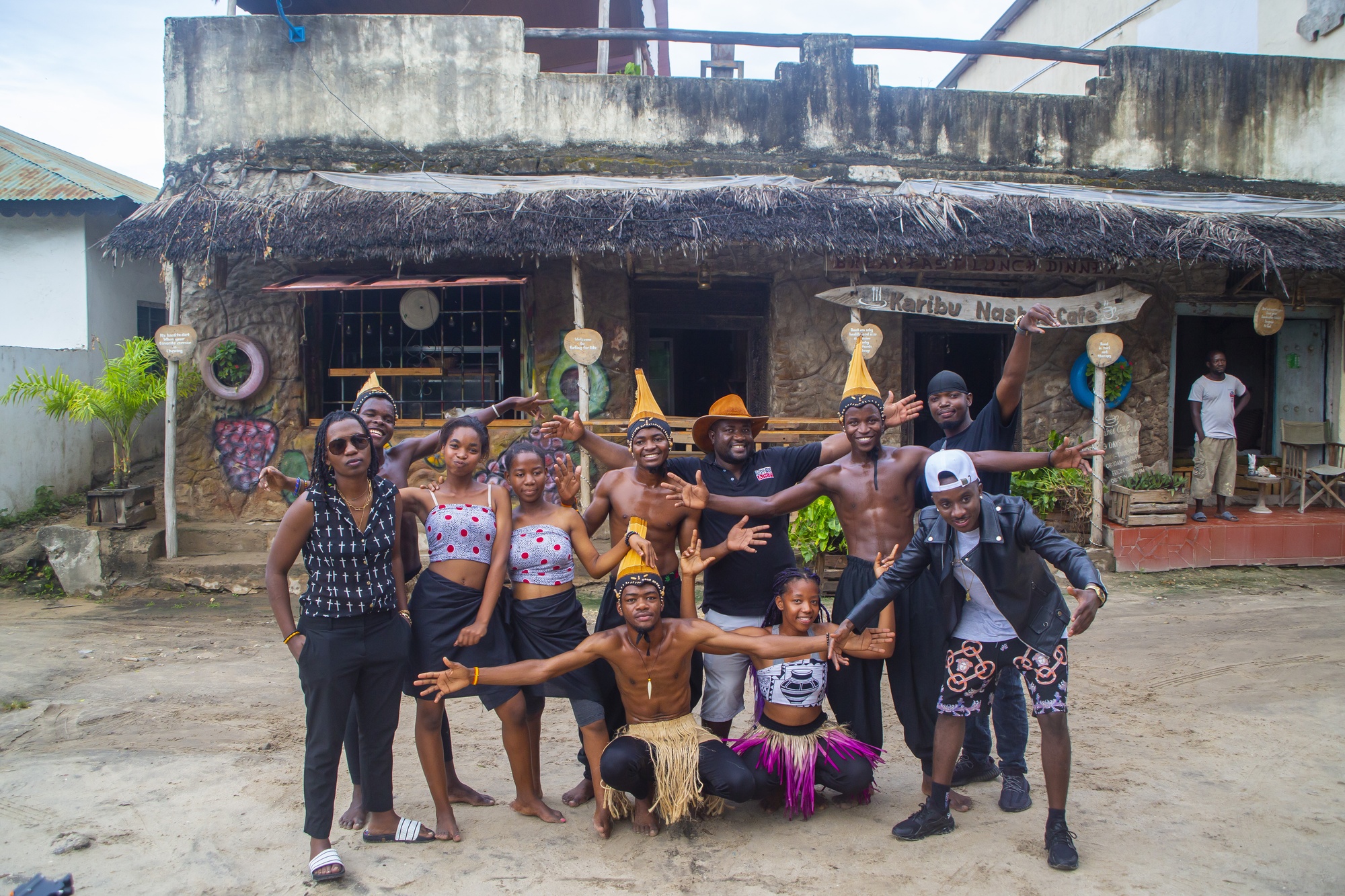
I’ll leave you with this:
The ocean is culture, not just nature.
Music can translate ocean knowledge into public understanding.
Conservation must include both ecosystems and the communities whose heritage is tied to them.
This is the work Bahari Yetu seeks to do: not to replace science or policy, but to carry ocean knowledge into everyday listening spaces, where people form values, memory, and public will. In that sense, it is music activism for cultural heritage: turning research, heritage, and lived experience into sound that can travel further than academic spaces usually reach.
Bahari Yetu is one song, but it points to a wider possibility: East Africa telling its ocean stories in forms people actually listen to, feel, and carry. Because if the ocean is ours, then caring for it must also be ours, not sold, not stripped, and not remembered only after it is gone.