
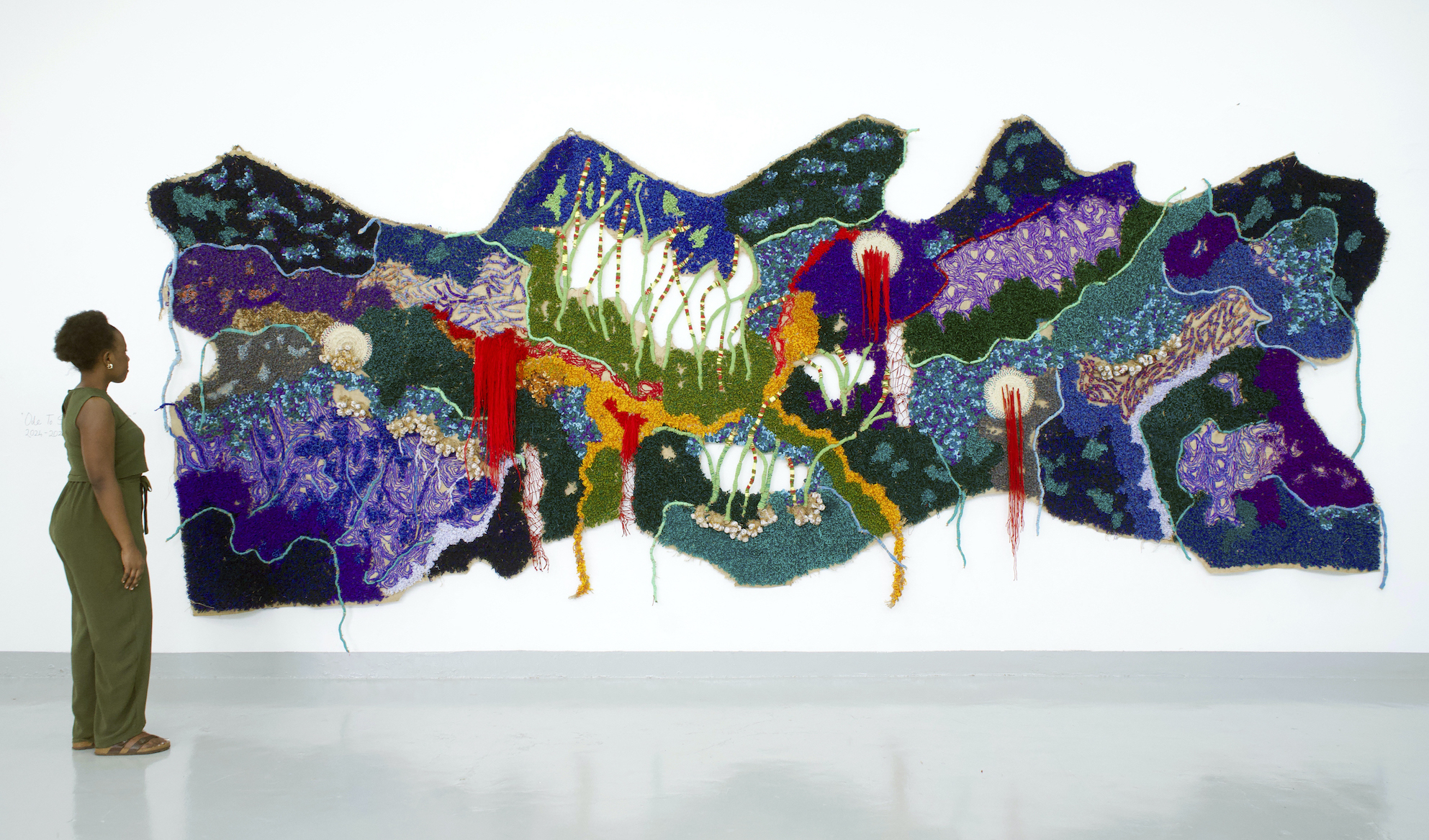
The vibrant colours of her works and the materiality of these organic structures imbue the tapestries with life, almost rendering them living organisms with their own stories. Her works and their materiality are not only a witness to emotional and sensory engagement with a place, but through the materials, they carry intangible cultural heritage, telling the stories of the places and people.
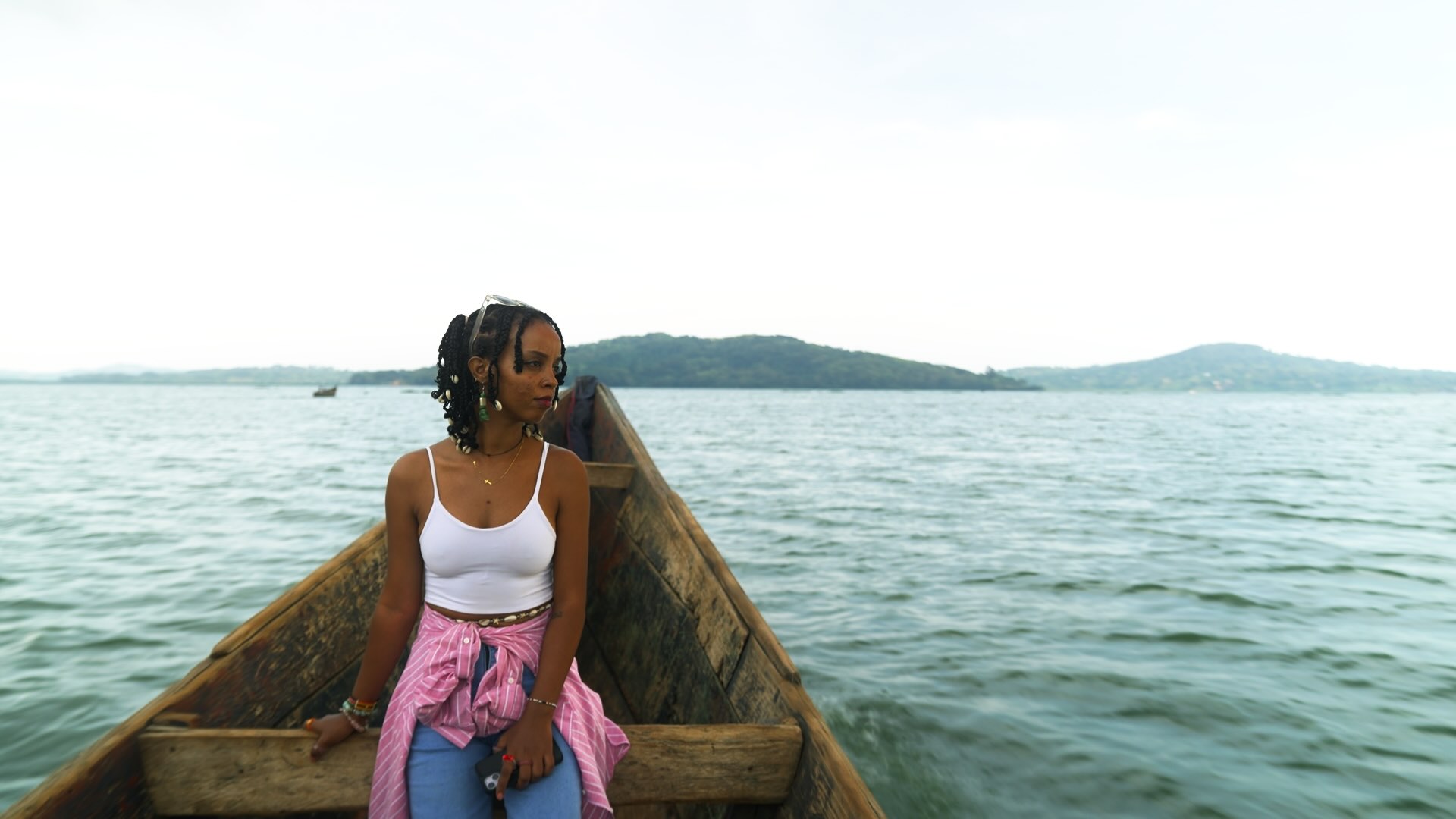
In her conversation with SeaVoice, Solomon shares her personal connection to the world’s longest river, the Nile, which flows through her motherland, Ethiopia, and her second home, Kampala, Uganda. She also shares how her own observations of water not only shaped her art but also how she translated these concepts to her personal life, practising the interconnectedness we also witness in her works. This form of Ocean Literacy through art runs throughout Solomon’s work and is explored further below.
Your recent exhibition, From Addis to Kampala: A Sensory Geography, describes your own journey from your homeland, Ethiopia, to your current home, Uganda. The different materialities of your tapestry works carry their own stories connected to physical and emotional places -like the jute sack that became central to your work, representing Ethiopia, your home where jute sacks are used to package coffee. But it goes beyond that; jute also represents the people that are essential to coffee production, but are often overlooked in the face of global profit. By implementing the jute, you choose to tell the story of people and their land – passing on intangible heritage through materials. Can you tell us more about the sponges you also use? What are their stories, and what is your personal relationship with them?
For me, the sponge represents the feeling of home. I discovered it after moving to Uganda, a traditional Ugandan sponge made from a plant. I was drawn to its texture: dry, rough and strong, almost distant. When touched with water it transforms completely, becoming soft, flexible, and gentle on the body. This transformation inspires me.
Through the sponge, I explore care and everyday rituals, particularly bathing. Bathing is quiet, private, intimate, a moment where the body meets water, touch, and presence. It is in these small daily acts that a feeling of home is created, not through a place, but through care and attention.
The sponge also carries a local story. Common in Ugandan homes and markets, it is often overlooked— ordinary. By bringing it into my work, I celebrate something rooted in everyday life and local knowledge, connecting the body to nature and to water.

All your works share an organic appearance, making them look alive. Two of your works pay special attention to water: Flow Like Water and Nile. The colours you chose clearly reflect the different colour combinations we see in water, as well as the colour of the soil beneath the water. Is there something (unexpected) you’ve learned from bodies of water (or the ocean) that may be reflected in your works?


All my works share an organic quality, as if they were alive. Two pieces, Flow Like Water and Nile, pay particular attention to water. The colours I choose reflect its changing tones, sometimes bright and clear, sometimes muted and earthy, echoing the soil beneath it. The water’s shifting hues remind me of the lessons it teaches about life, freedom, and movement.
Since moving my studio near Lake Victoria, I spend most of my time observing it. The lake has become a teacher, showing me to let go of the past and embrace the present, just like water does. Its flow is never the same, sometimes pure and vibrant, sometimes dull but free. Its sounds shift from playful to calm, reflecting the cycles of life.
Being near the lake has taught me to flow like water to move freely, accept change, and live in the moment. This experience guides my practice, showing me that materials, movement, and colour can mirror the same freedom and cycles I witness in nature.


Let’s talk about Flow Like Water. In a way, it appears to be complementary to your piece Let’s spread our Wings and Fly. Both invite the viewer to embrace, or even surrender to, the flow of water or a draft of air. Their colours are almost complementary, but both titles could be understood as prompts for life in general. Does flow play a role in your practice? When you create a piece, do you see where the wind blows you? Or do you search for a clear vision for a piece before you create it?
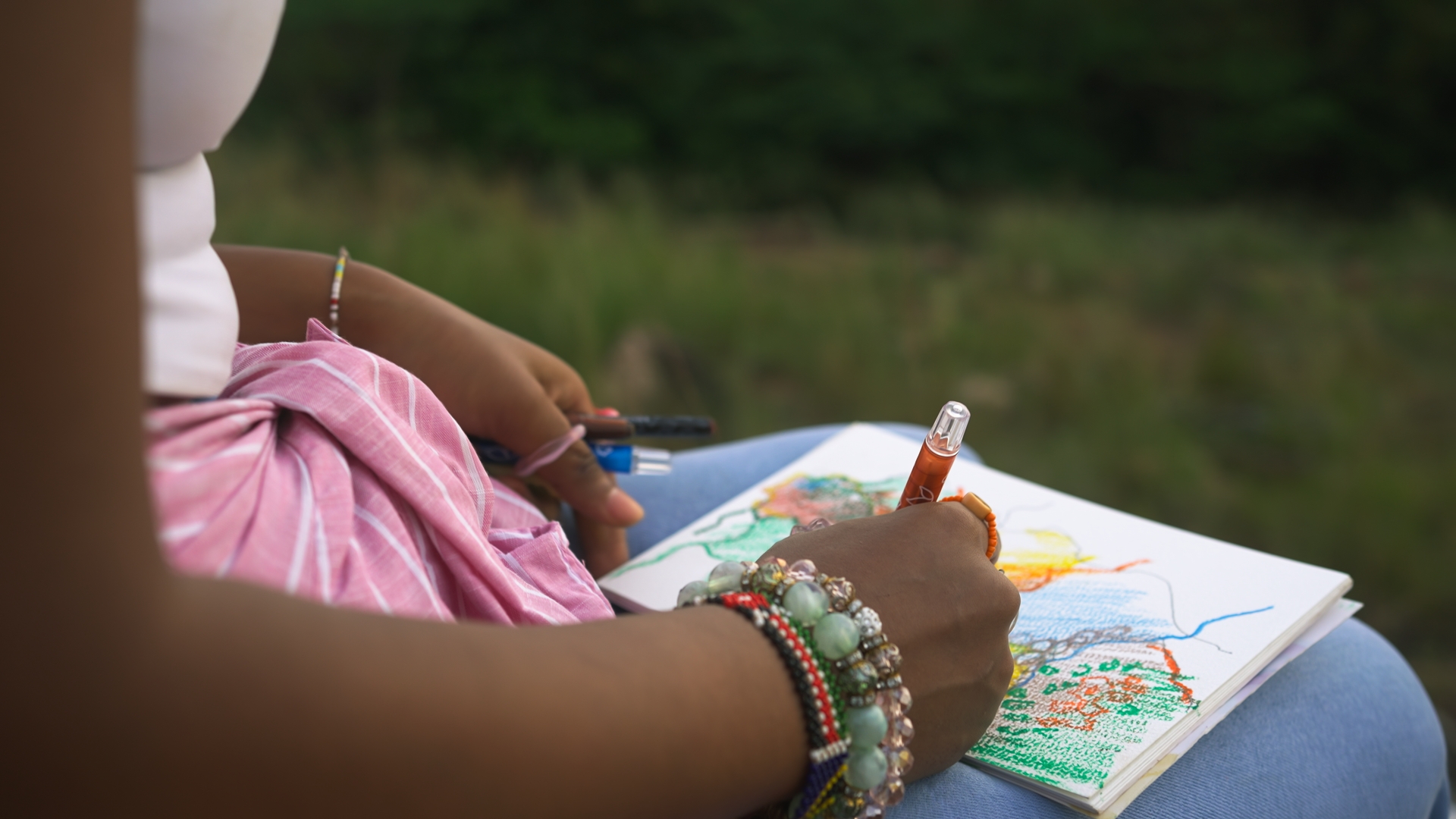
Flow is very important in my practice. I usually start by taking a picture to capture a moment or idea. Then I experiment with textures, patterns, and shapes. I pay attention to what my eyes see and how my mind learns, discovering new connections along the way. This helps the work develop naturally instead of following a strict plan. I like to let the materials and ideas flow freely, finding their own path, like following the wind or water.


Then there is your piece, Nile. The Nile is probably one of the few rivers that almost everyone knows, since it is the world’s longest river and emblematic of Northeast Africa. The Nile has two sources: the White Nile, which flows through Uganda, and the Blue Nile, which originates from Lake Tana in Ethiopia and joins the White Nile in Sudan. Do you think the Nile plays a significant role in the life of the people in Northeast Africa, and does the role or character of the Nile change depending on the country you’re in?
Growing up in Ethiopia, the Blue Nile was seen as a blessing. It carries life and symbolises identity, sovereignty, and hope. I watched communities contribute to building the dam, and through this, I saw unity, pride, and life in motion. For me, the Nile has always represented in connection, purity, and shared experience.
Since moving to Uganda, I have experienced the White Nile flowing through several countries. Seeing it gave me a sense of home and belonging beyond borders. Its character changes depending on the land it passes through. In Ethiopia, it feels like pride and blessing; in Uganda, it feels like connection, freedom, and continuity. In Sudan and Egypt, it shapes culture and life. Observing its flow, colour, and rhythm continues to inspire my work, reminding me of life’s cycles, the importance of presence, and our connection to nature.
As somebody who left their home country, you had to find or create a new community. You also offered a create & connect during your exhibition - an opportunity for people to come together and work with different materials and techniques, and to share their own stories through their creations. Do you consider your art a tool for creating community, and will you continue to interweave the social with the creative?
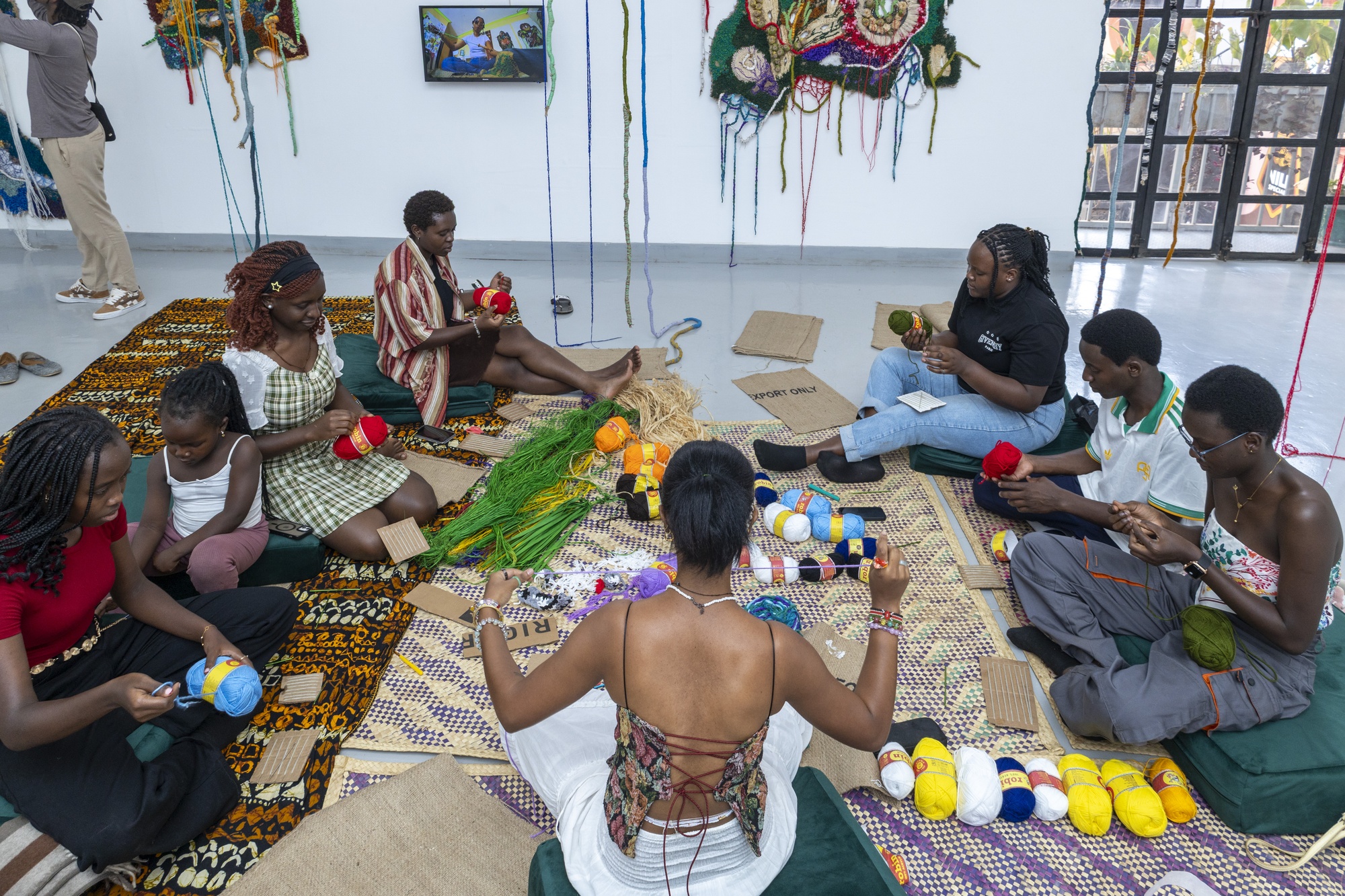
Experiencing the Create & Connect sessions through Afriart Gallery for the first time was incredibly inspiring. I was amazed by how excited the community was to engage with different materials and techniques, crocheting, weaving, and to share their own stories through their creations.
I loved seeing people enjoy the work I had done and explore their own ideas through participation. It showed me how creativity can bring people together, spark conversation, and create meaningful connections. My art is very much a tool for building community because it encourages participation, dialogue, and shared experiences, allowing people to connect with one another through making. I am committed to continuing to interweave social engagement with creative practice, encouraging people to explore, participate, and connect through their own creativity.


Lastly, is there a body of water that you hold dear and with which you have a special relationship? Maybe even a body of water that you’ve never personally visited but which you yearn to see and experience one day?

The body of water I hold dear is Lake Victoria, near my studio in Uganda. Spending time there has taught me about the flow of water, change, and the cycle of life. Watching how the water moves, how its colours shift, and how life surrounds it has influenced the way I think about movement, presence, and freedom — lessons I carry into my art every day.
While I have never travelled to some of the world’s famous bodies of water, I yearn to experience them one day. At the same time, I continue to explore and find inspiration in the waters near me, discovering beauty and meaning in the landscapes that surround my daily life.