

For Bento, that fear came early. Growing up along the Mozambican coastline, the sea was a constant presence; vast, powerful, and unforgiving. As a child, he nearly drowned while spearfishing. This experience turned the ocean into a dangerous place, one to avoid or survive, despite its once playful appeal.
I met Bento through Love The Oceans, an NGO working within the community to improve ocean safety and education. By then, his relationship with the sea had shifted, the struggles of his past forging a new sense of purpose.I admired the strength required to conquer such a deeply rooted fear, but it was his decision to help others regain trust with the sea that drew me in. I worked with Bento over the course of a month to produce the film Peixinho (Little Fish), a story of overcoming fear, connecting with the ocean, and learning to survive.

Bento’s turning point came with something deceptively simple: swimming lessons. In many parts of the world, swimming is assumed to be a basic skill, learned early and rarely questioned. But here, access to lessons or training is not guaranteed, and without it, the ocean remains a risk.
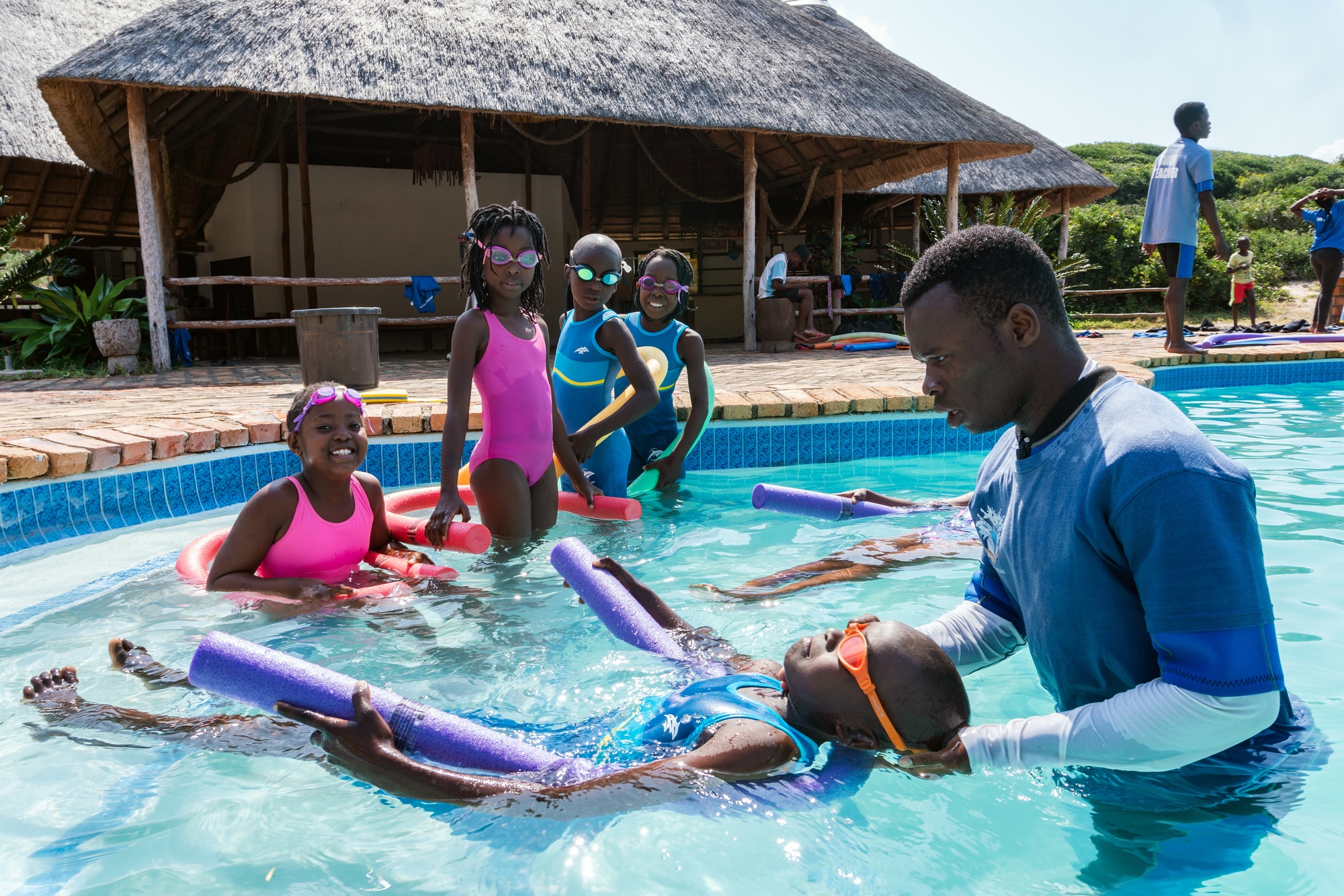
Through Love The Oceans, Bento signed up for swimming lessons, learning to stay afloat and how to exist in the water with intention. Fear gave way to familiarity as he started to close the distance between himself and the sea, allowing for a new connection to form. Now empowered, Bento fully immersed himself in the water.
Today, Bento is a certified swimming instructor. Through Love The Oceans’ swimming programme he teaches children in his community how to swim, how to read the water, and how to move safely within it. Having a friendly face from the community as an instructor helps give parents the confidence to send their children to lessons. He has also become a scuba diver, exploring the very environment that once nearly took his life. There is a quiet symmetry in that journey. From almost drowning to teaching others how to breathe.
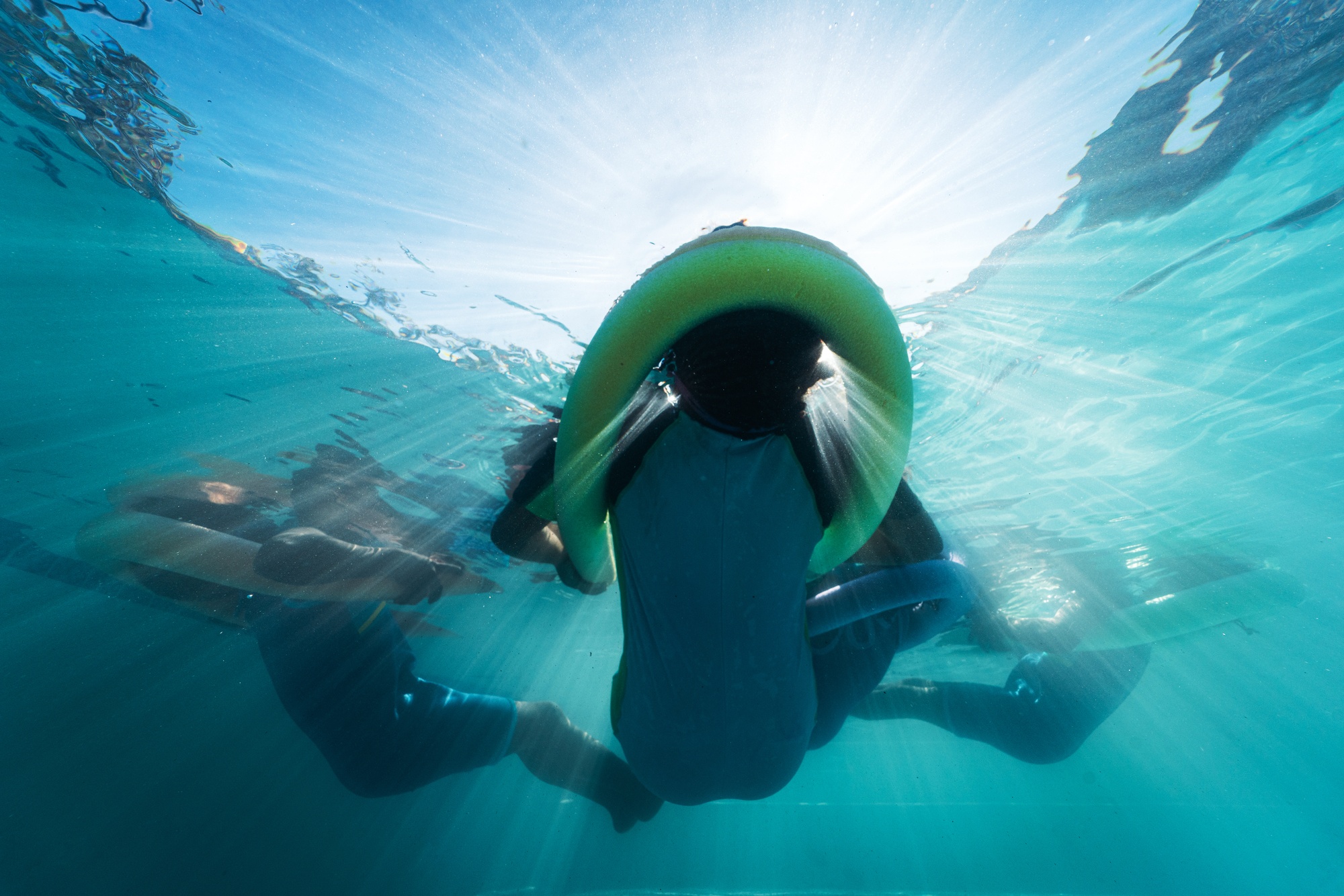
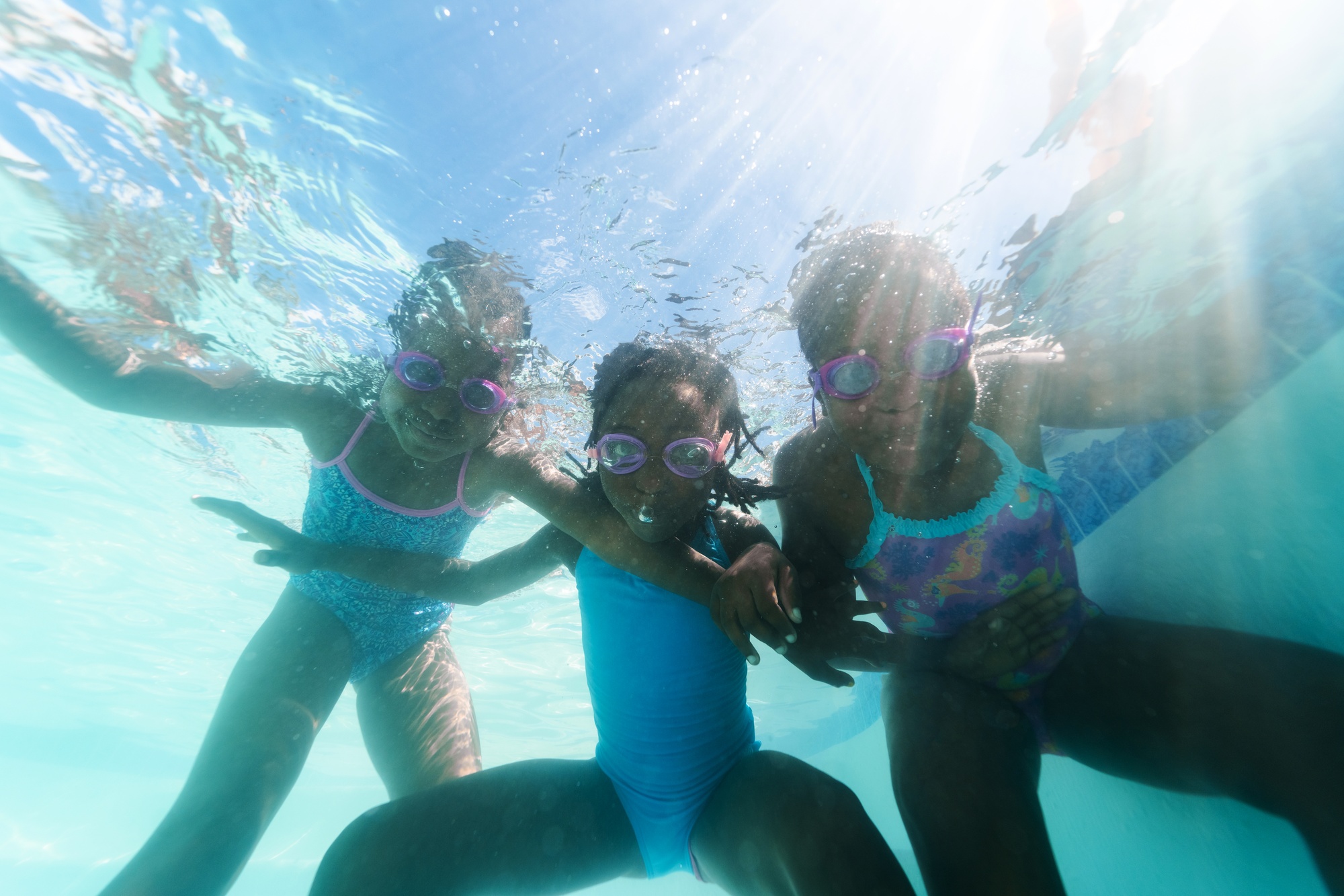
The majority of the community in Jangamo relies directly on the sea for their livelihoods, whether through fishing, tourism, or small-scale coastal trade. Daily life is shaped by tides, weather, and the rhythms of the water. The ocean feeds families, supports income, and anchors cultural identity. The sea has been a space where necessity and fear create a tension, pushing towards yet pulling away from the shore. And yet, access to even the most basic water safety skills remains limited. Only a small percentage of people in the region know how to swim. A lack of infrastructure, education and the effects of a colonial past have led to a deep-rooted fear of the water.
To depend so heavily on the ocean, and yet have it be a constant source of danger, reveals a critical gap, one that carries real consequences.
I filmed in Jangamo for a month, there were 10 drownings during that time. There were 10 drownings in the area during my month of filming in Jangamo.
It is within this space that Bento’s story takes on deeper meaning because learning to swim extends beyond a simple safety skill. It allows people to redefine their relationship with water, and to safely navigate their place within the coastal landscape, not apart from it. This is an important and often overlooked element of Ocean Literacy. How we remain safe in the ocean (through learning to swim, understanding the tides, and reading the weather), and how the ocean remains safe from us (through reducing pollution, greenhouse gas emissions, and sustainable development) is a global issue.
Peixinho, “little fish”, is a title that reflects scale, but also perspective, because Bento’s story is, in many ways, small. It unfolds without spectacle. There are no dramatic turning points, no singular defining moment of triumph. Instead, it exists in fragments of lessons taught, fears unlearned, and knowledge passed on. These stories often go untold but they are essential to how we understand the ocean. Developing safety skills enables communities like Bento’s to safely engage with the ocean, strengthening ocean literacy through lived experience.
As a filmmaker, I’ve spent years documenting the ocean’s most iconic wildlife encounters. But the more time I spend in coastal communities, the more I’m drawn to what exists around those moments - the human narratives that shape, and are shaped by, the sea. Bento’s journey is not an anomaly and that is precisely why it matters.
Across the world, there are communities where the ocean is both provider and threat. Where children grow up surrounded by water, yet without the tools to navigate it safely. Where something as fundamental as learning to swim can redefine a life.
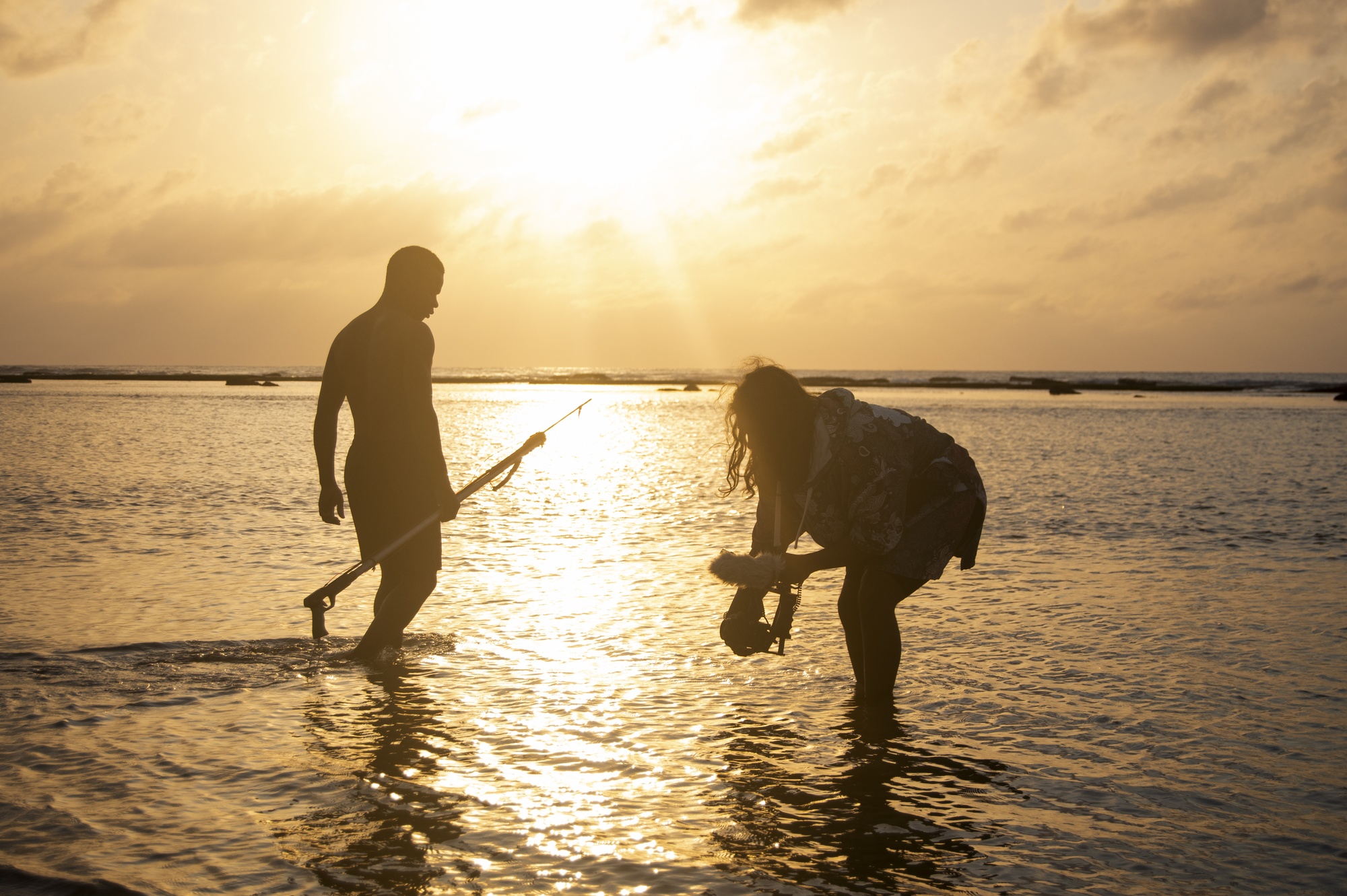

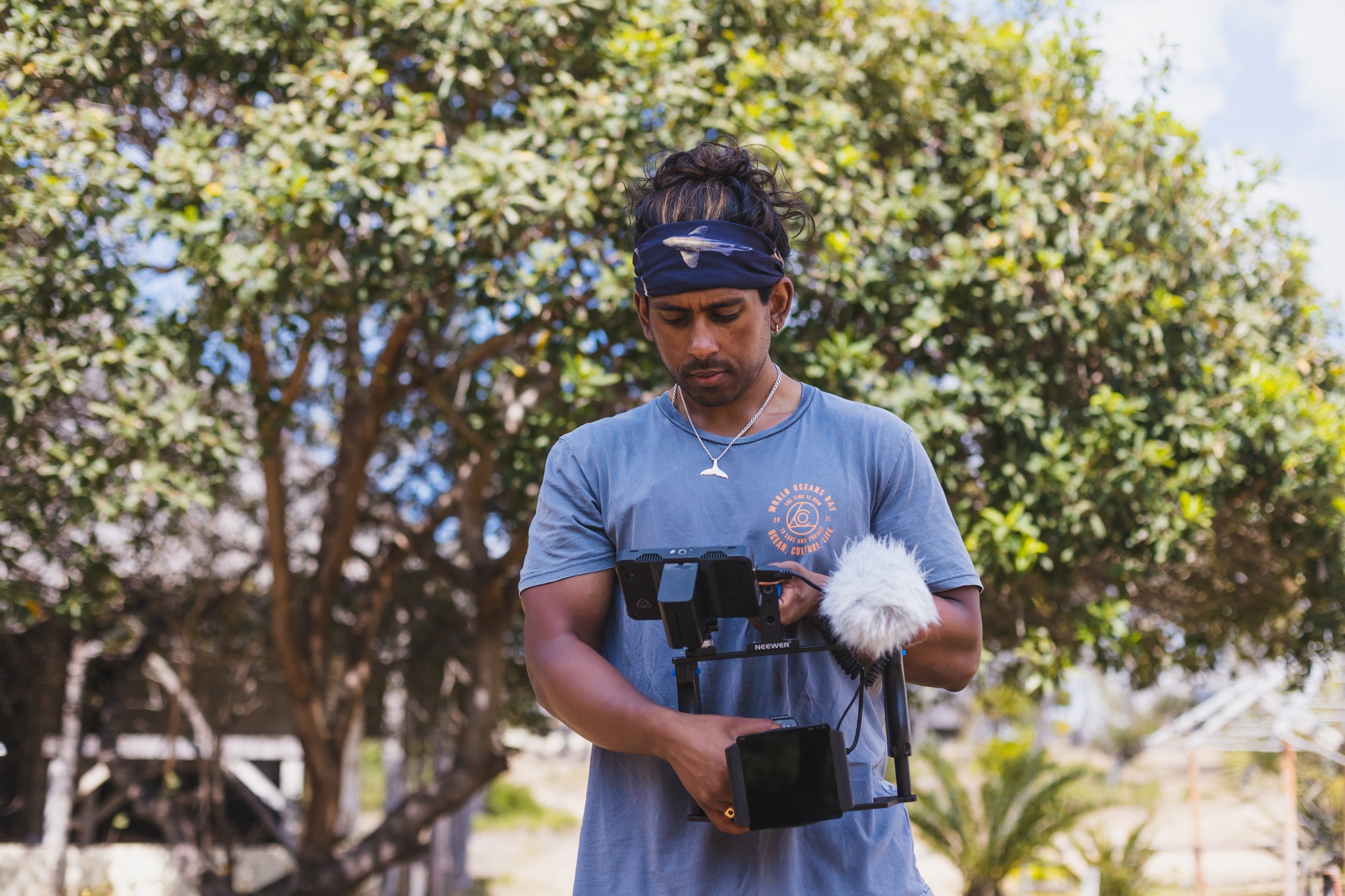
Peixinho marked a shift in my own journey as a filmmaker.
Up until this point, my work had been rooted in wildlife, capturing fleeting, often unpredictable encounters with animals in their natural environment. Those moments rely on patience, instinct, and a deep understanding of behaviour. But they don’t ask for the same kind of vulnerability. Telling Bento’s story was different.
For the first time, I wasn’t just observing, I was engaging with someone’s lived experiences, and that required a different approach. I had to learn how to listen more closely, how to create space for emotions to surface naturally, and how to build trust beyond the lens. It wasn’t about directing him, but rather about understanding him, and the story he had to tell. Some of the most powerful moments came from simply being present - allowing silence, allowing reflection, allowing Bento to exist without interruption. As we spent more time together those moments began to open up. I noticed small expressions, subtle shifts, and fragments of a story that carried far more weight than anything I could have constructed. I realised quickly that emotion can’t be forced, it has to be felt by the subject first, and then by the person behind the camera.
This process changed the way I approached filmmaking. It slowed me down and made me more intentional. I became more aware of the responsibility that comes with telling someone else’s story because when the focus shifts from wildlife to people, the stakes are different. And so is the impact.
While Peixinho is rooted in Mozambique, its meaning extends far beyond it. Bento’s story speaks to access, opportunity, education, and knowledge that are often overlooked. In places where the ocean defines survival, ocean literacy becomes essential. .
Ocean conservation is often framed in abstract terms. Words like species, ecosystem, and global change, can feel distant and detached. To enact meaningful change, we must include the missing piece: people.
Bento exists within the space that connects ocean and community. By sharing his story, I wanted to shift the lens slightly - to show that conservation is not only about protecting what lies beneath the surface, but about supporting those who live alongside it.
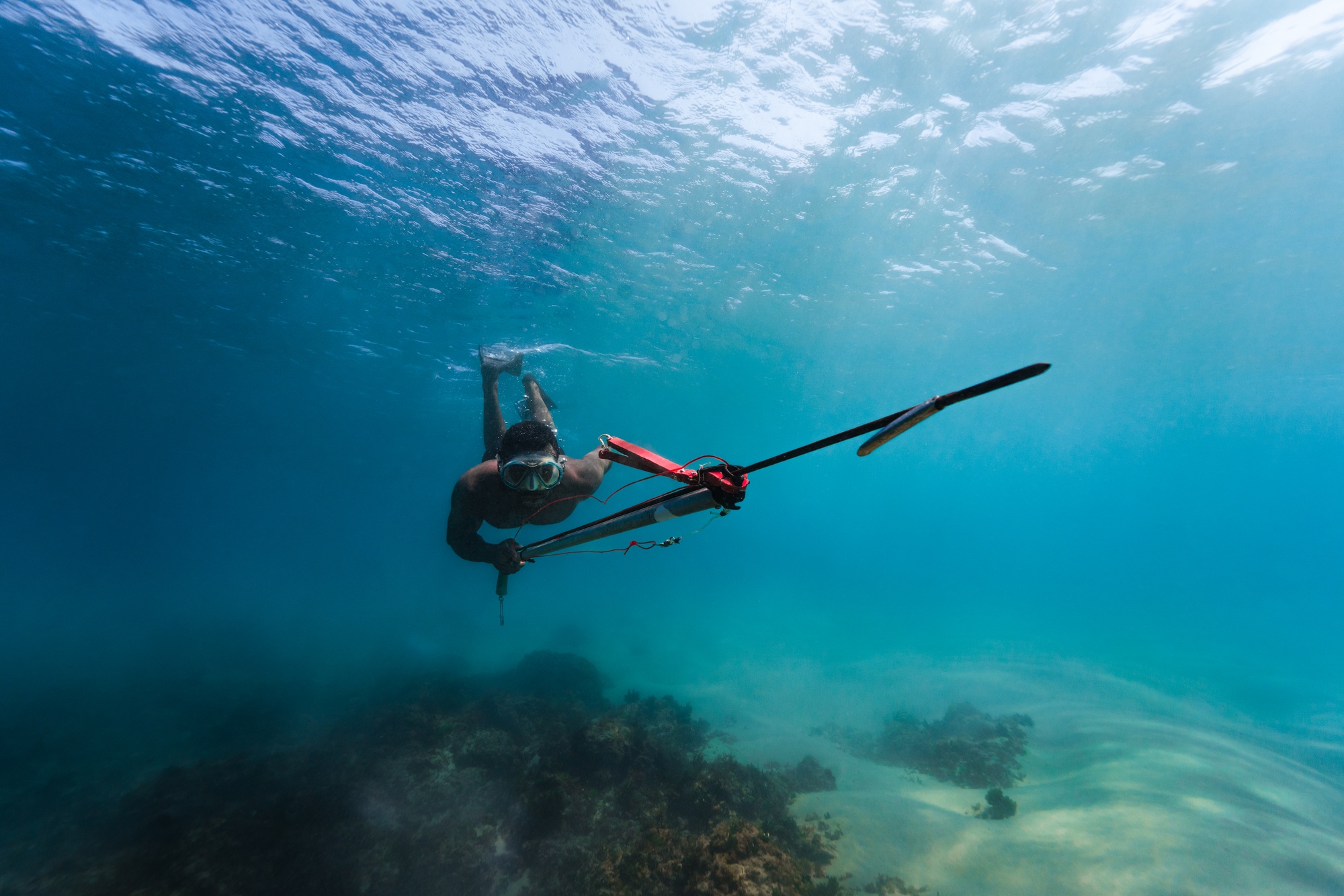
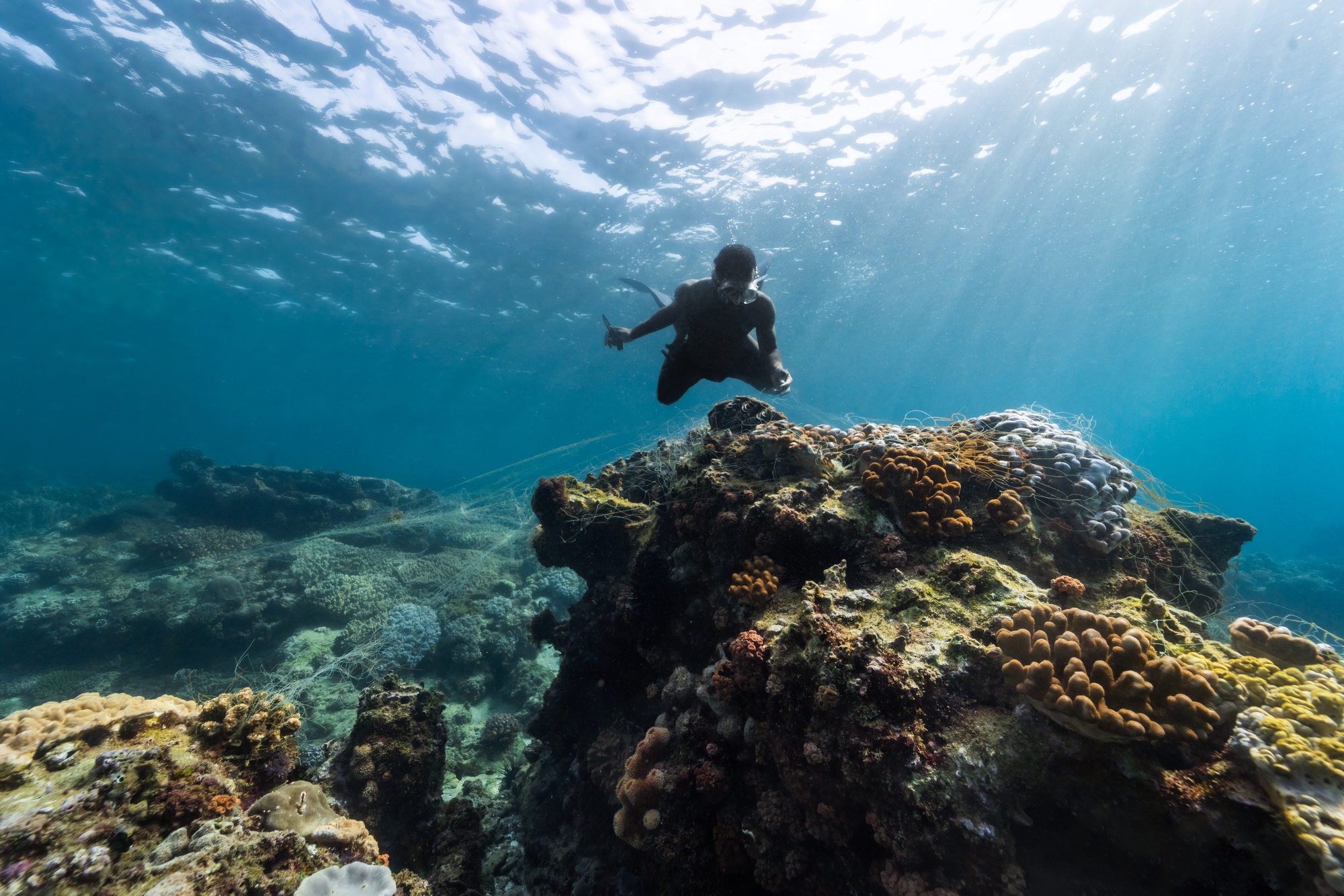
“I feel very proud to have my story shared across the world. I am glad to be able to encourage the next generation to interact safely with the ocean, and to love it as much as I do. I hope that this love for the ocean will mean they do their best to protect it for the future.”
- Bento Nhamussua
When we screened the film with his local community in Jangamo, attendance at swimming lessons began to increase. More children are now stepping into the water and more families are recognising the importance of ocean safety.
Beyond Mozambique, Peixinho has been nominated and recognised at over 25 film festivals around the world. Each screening carries Bento’s story further to new places, new audiences, and new conversations.
I’m incredibly proud to be able to share Bento’s story. Not just as a filmmaker, but as someone who believes in the power of storytelling to create change. If Peixinho can do anything, I hope it serves as a reminder that fear can be transformed, that opportunity can ripple outward, and that a single story has the power to change how someone sees the ocean. Maybe even how they choose to step into it.