

Ocean acidification is one of climate changes’ “invisible ghosts” haunting our ocean. Caused by humans’ CO2 emissions, it is altering the chemical balance of seawater that marine life depends upon for functioning and survival.
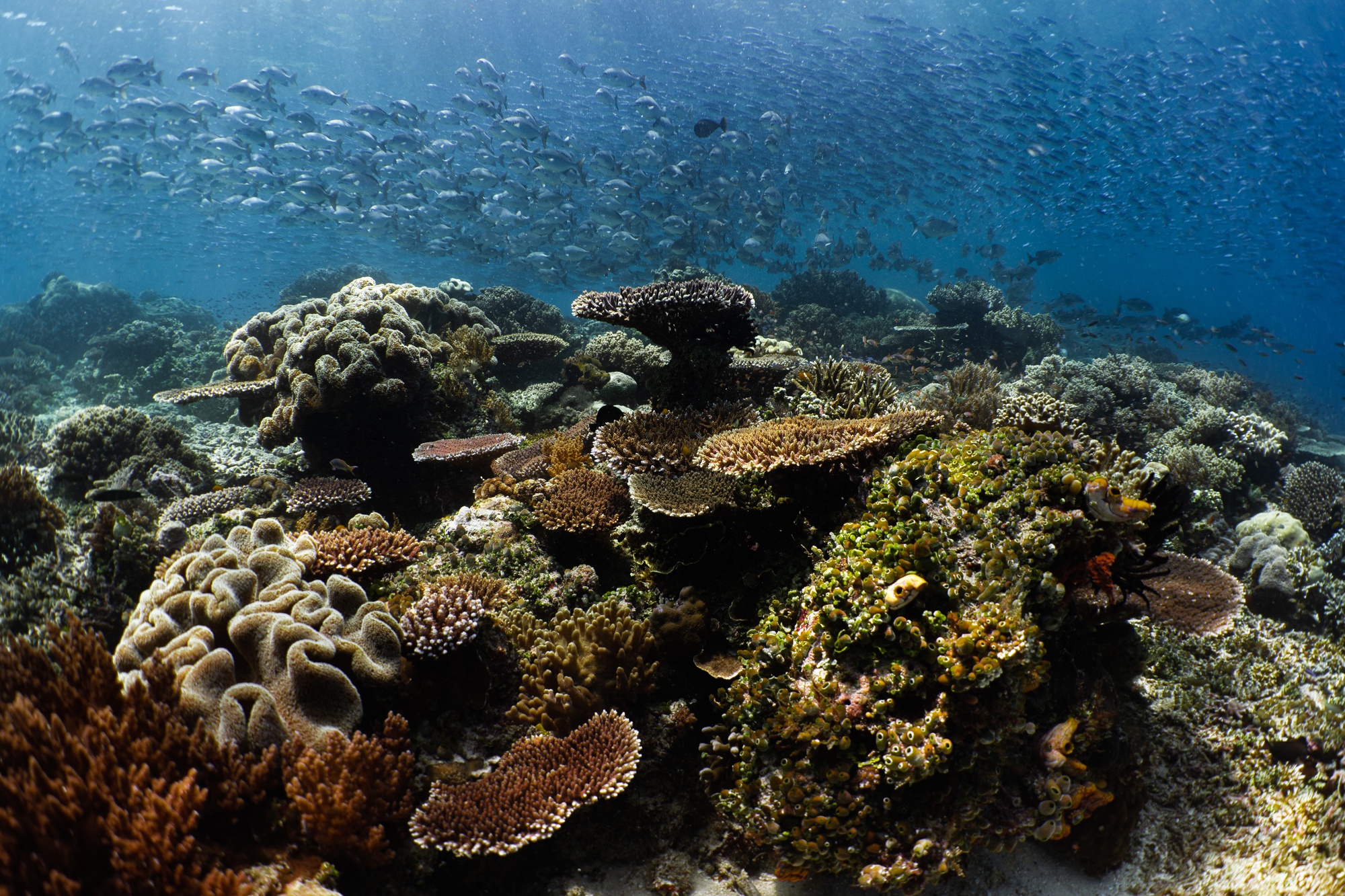
Though ocean acidification is happening beneath the surface, unseen and unheard by humans, it is acutely sensed by marine organisms. From the weakening of shell-building species like corals and oysters to disruptions in chemical communication of fish, ocean acidification impacts the lives and interactions of marine life.
The International Alliance to Combat Ocean Acidification (OA Alliance) unites global leaders and organisations to confront the challenge of ocean acidification, representing nearly 300 million people and more than 366,000 km of coastline around the world. It’s members are dedicated to increasing ambition for climate action and transforming responses to climate-ocean change.
Through the #OAHaiku campaign, part of the UN World Oceans Day 2024, OA Alliance members embraced storytelling and poetry to evoke emotional connections and raise awareness around ocean acidification.
Written by those working within the climate-ocean community, these poems capture the sensory experience of the crisis and the tireless efforts to expand knowledge and find solutions for the impacts of ocean acidification on marine ecosystems, species and communities.
The poems offer a glimpse of the wisdom, expertise, and experiences that have shaped individual contributions to climate-ocean action, bringing to life the sensory experiences of ocean acidification. Through vivid imagery, they awaken new depths of emotion, communication, and connection.
Dissolving oysters. By Juliana Corrales
My protective shellSlowly dissolving awayTotally exposed
Professor Stephen Widdicombe,
Director of Science and Deputy Chief Executive, Plymouth Marine Laboratory
Panda is cuddlyBut no prochlorococcusAnd no life for us
Ambassador Peter Thomson,
United Nations Secretary-General's Special Envoy for the Ocea
Silent reefs, soft shellsA call for action emergesOcean the blue thread
Alfredo Giron,
Head, Ocean Action Agenda, World Economic Forum
My greatest wish isThe ocean is known as aClimate solution
Janis Jones,
CEO, Ocean Conservancy
degrees of separation1 ocean climatepoint live coral feasts breathing, 5 plus, plastic fish
Audrey Brown-Pereira,
Secretariat of the Pacific Regional Environment Programme
Perhaps just in timeThe decade of ocean healthcoral reef heedless
Martha Kongsgaard,
Chair of the Marine Resources Advisory Board, Washington State

A presumed expanse,an assumed sequestration—exhausted buffers.
Samantha Jones,
Writer and PhD Candidate, Geography, University of Calgary
Deep reefs out of sightcoralporosis crumblingcomplex structure lost
Sebastian Hennige,
Senior Lecturer, School of GeoSciences, University of Edinburgh
Our excess carbon - She’d take it all if she could.Wave by endless wave.
Edith Mari,
UN Decade of Ocean Science Programme Lead & U.S. Policy Consultant, OA Alliance

Waste gases seep deep,Ocean's balance upended.Hope in human hands.
Dr. Sarah Cooley,
Director of Climate Science, Ocean Conservancy
Silent reefs, soft shellsA call for action emergesOcean the blue thread
Alfredo Giron,
Head, Ocean Action Agenda, World Economic Forum
Climate-ocean change:Regions, basins, places that Make us who we are.My life has been changed Not just by the ocean, butHer people: you, me.
Jessie Turner,
Executive Director, OA Alliance
This article was provided in collaboration with Edinburgh Ocean Leaders. Edinburgh Ocean Leaders is supported by The University of Edinburgh, the Prince Albert II of Monaco Foundation, The Castansa Trust and other valued partners.