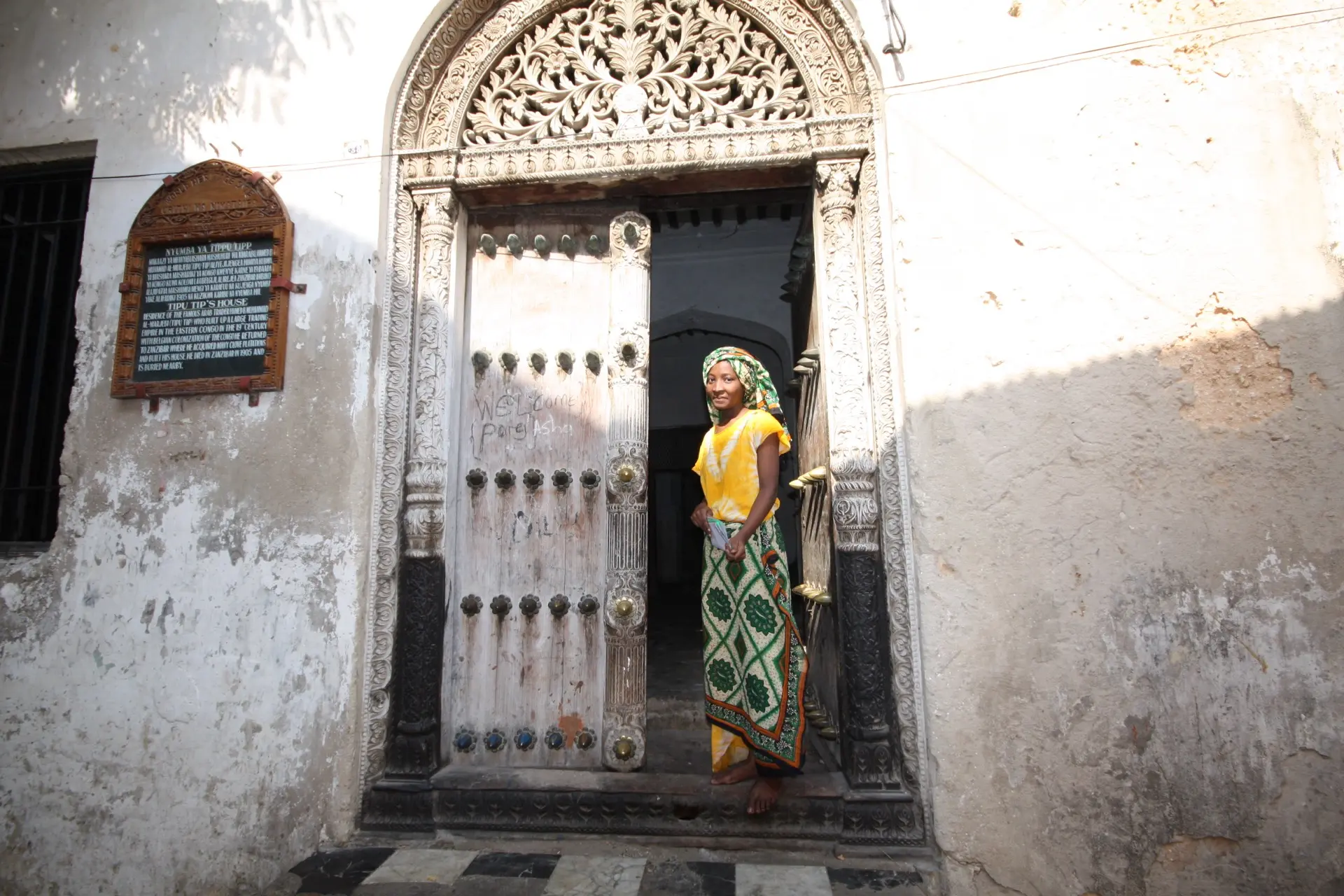

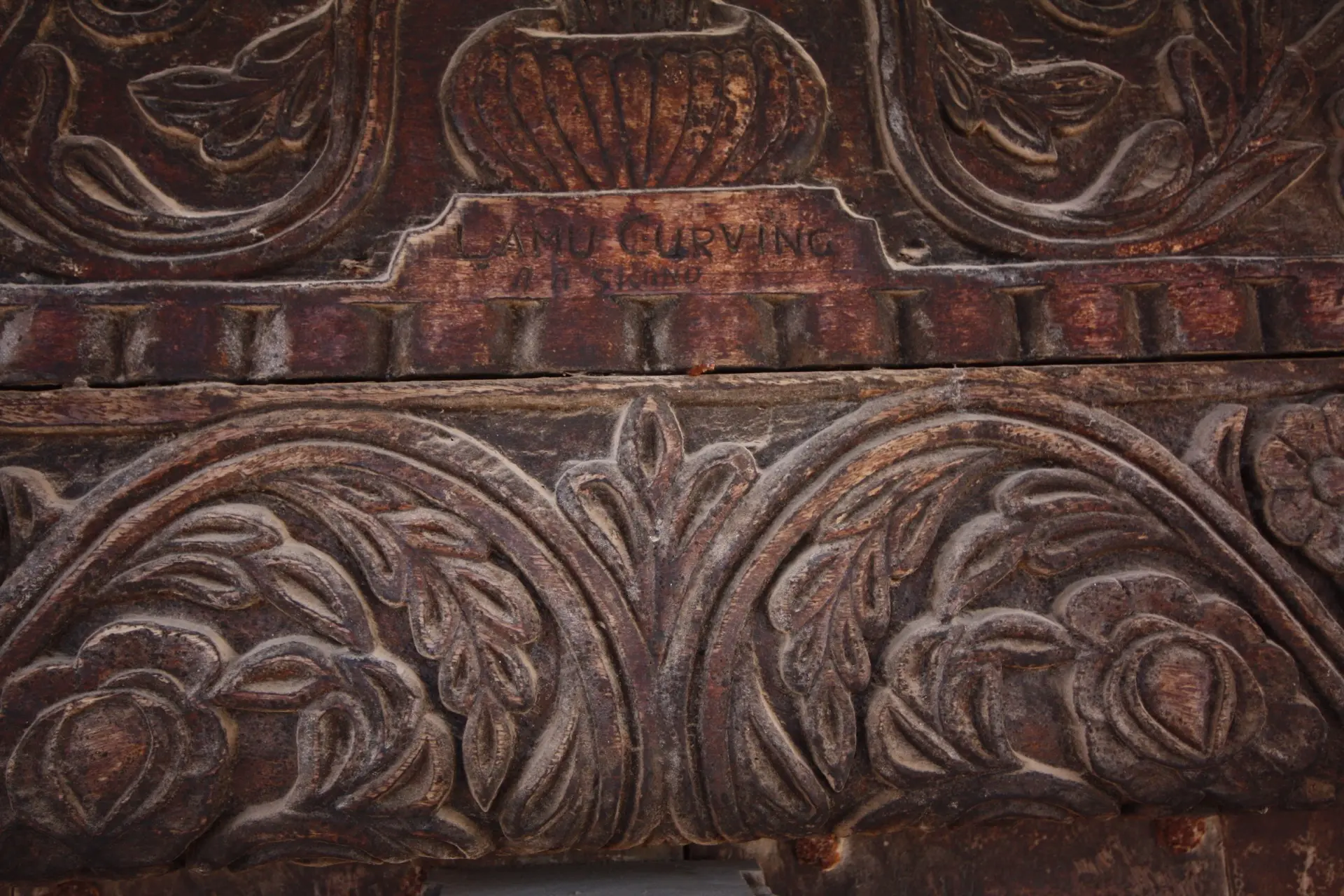
Visitors pause to admire their geometric patterns, Qur’anic inscriptions, brass studs, and curling vines. Yet these doors are more than decoration. They are cultural archives, carrying layered histories of movement, trade, faith, and enslavement embedded within the Swahili coast.
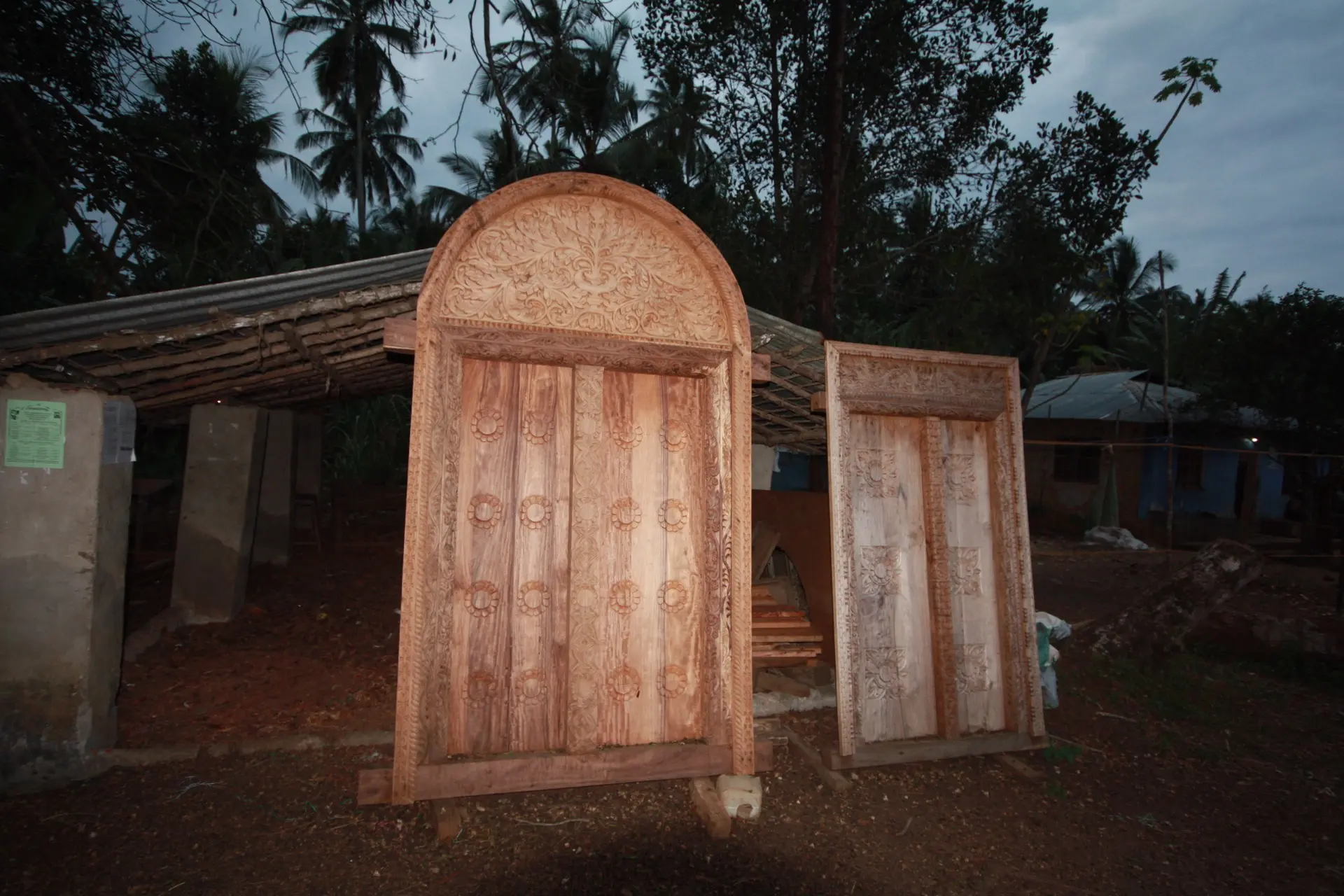
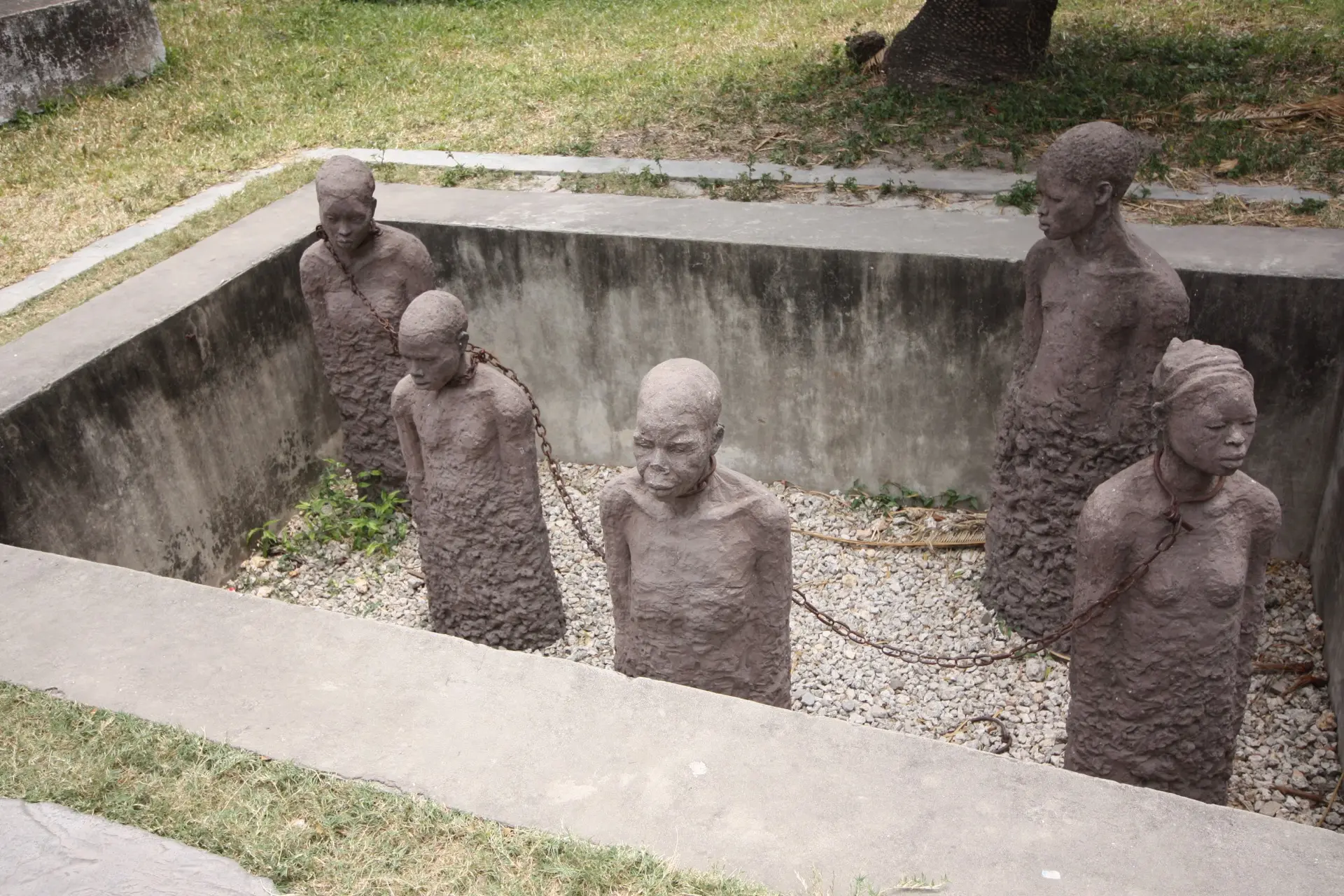
My own journey into these histories unfolded between 2008 and 2011 through Lamu, Mombasa, Zanzibar, and onward to Oman. Walking coral-stone streets, speaking with woodcarvers and conservationists, and visiting former slave sites revealed how material culture preserves memory where written archives often fall silent.
Carved doors flourished during the nineteenth century alongside the rise of clove plantations and the Indian Ocean slave economy under Omani rule. Their ornament and scale signalled wealth, faith, and social status shaped by interactions among African, Arab, Indian, and European worlds. Distinct regional styles—from Lamu’s inward-facing courtyard houses to Zanzibar’s elaborate palace doors—reflect a cosmopolitan society forged through trade and empire.
Motifs carved into the wood hold shifting meanings.
Chains may represent protection and security, yet many observers particularly within African diasporic memory interpret them as silent testimony to slavery. Lotus flowers suggest regeneration and prosperity; brass spikes, introduced through Indian influence, once guarded entrances. This means therefore evolves through memory and historical consciousness rather than remaining fixed in the object itself.
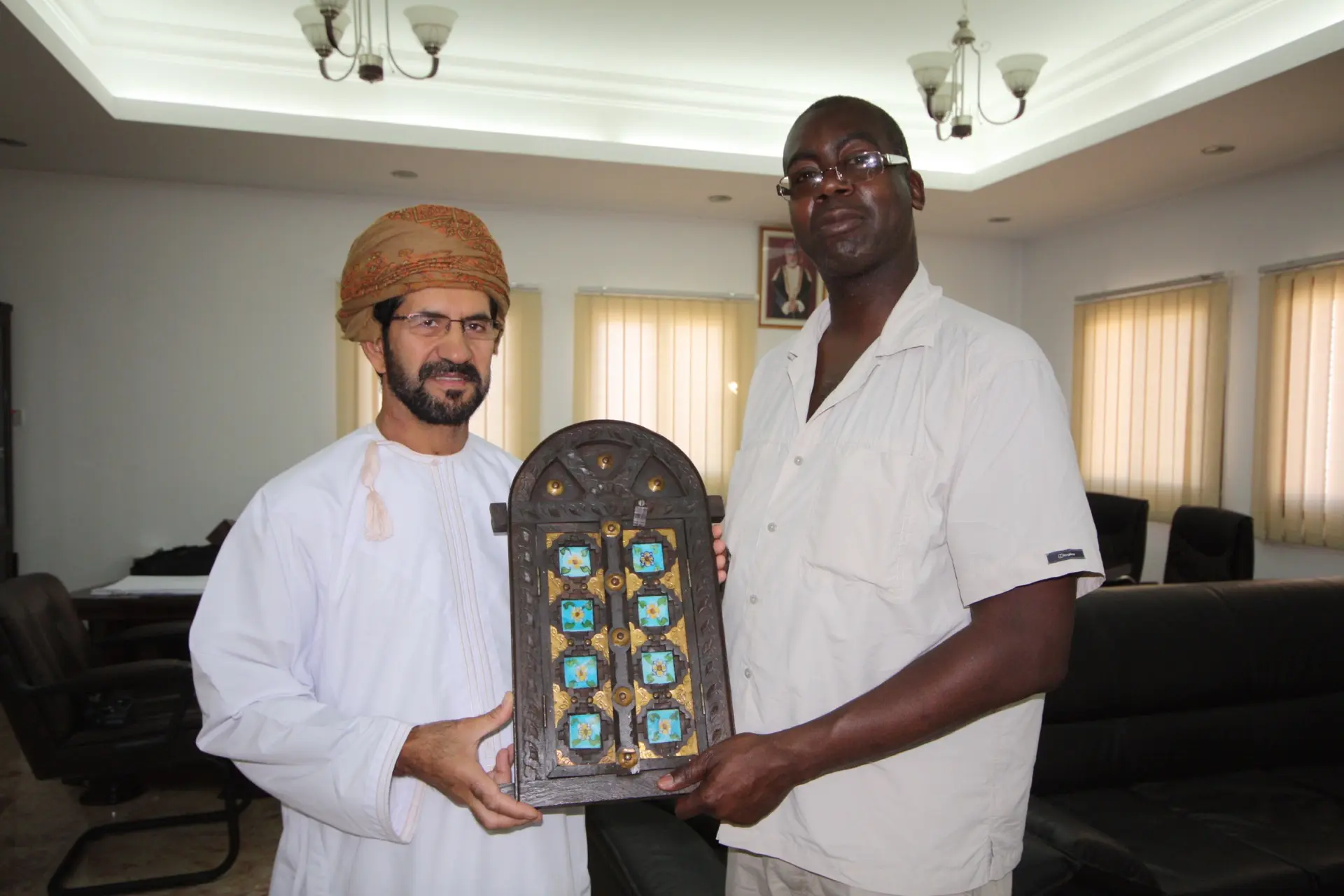
Today, heritage conservation and tourism across the Swahili coast brings both renewal and tension. Restoration projects preserve historic architecture and sustain craft traditions, while reproduction doors for global markets risk turning memory into decoration. The challenge is to conserve not only buildings and objects, but also the human stories and cultural knowledge that give them meaning.
Walking through Stone Town today, beauty and violence coexist uneasily.
Restored façades welcome visitors seeking idyllic coastlines, while memories of enslavement, revolution, and displacement remain embedded in streets and stories. Conservation can honour the past, but it can also sanitise it if memory is detached from lived experience.
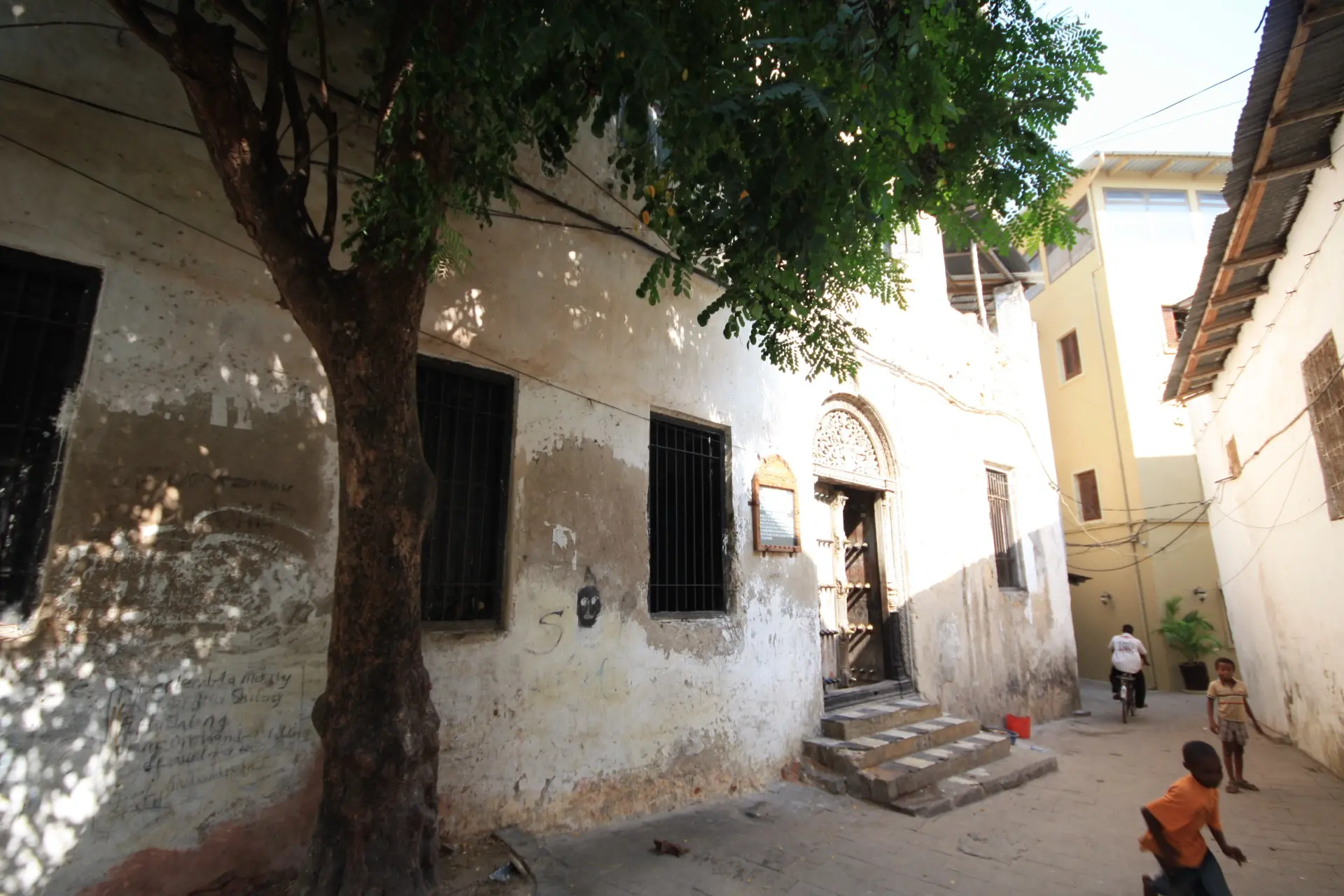
Despite these tensions, carved doors remain powerful witnesses to resilience. They embody centuries of cultural exchange across the Indian Ocean Islamic, African, Indian, and European influences woven into a shared artistic language. They also demonstrate how communities reinterpret heritage across generations, transforming symbols of hierarchy into tools for dialogue, remembrance, and identity.
To read these doors honestly is to confront uncomfortable histories while recognising enduring creativity. Heritage, in this sense, is not static preservation but an evolving conversation between past and present.
The call to action is clear.
First, conservation must move beyond aesthetics. Restoring carved doors and historic buildings should include truthful interpretation of their histories, including their connections to slavery, trade, and empire. This aligns with UNESCO’s emphasis on cultural heritage as a foundation for shared knowledge and understanding.
Second, local communities and craftspeople must be at the centre of heritage work. Their lived experience and knowledge are essential to sustaining both tangible and intangible heritage, reinforcing the principles of ocean literacy, understanding the ocean’s influence on people and people’s influence on the ocean.
Third, there is a need to expand public understanding of slavery beyond the Atlantic world. Integrating Indian Ocean histories into global education and heritage narratives supports UNESCO’s call for inclusive, plural histories that reflect interconnected ocean cultures.
Finally, heritage tourism must be approached with care. It should support local economies without commodifying memory, ensuring that sites of trauma are treated as places of learning, reflection, and respect.
Only then can the carved doors of the Swahili coast remain not relics of history, but gateways to understanding, opening toward a more honest and connected future across the Indian Ocean world.