


Malindi, one of the oldest Swahili settlements, is located on Kenya's coastline. It is an expansive stretch of approximately 45 kms from Ras Ngomeni in the North to Leopard Point in the South. Historical records indicate that seafarers visited the Kenyan Coast from at least the second millennium BC. All through this period, human activities have left traces of cultural materials on the coastline as well as on the seabed. This once tiny, sparsely populated fishermen's village has experienced great changes over the years.
For a town regarded as one of the oldest settlements in the country, Malindi literature - also referred to as “Melinde” in early cartographic maps - depicts the rich and longstanding relationship to the Indian Ocean. Like many other coastal Swahili trading ports, Malindi has a diverse urban fabric in its townscape. Archaeological evidence reveals this cultural blend, indicating the presence of remains of mosques associated with Swahili settlements as well as the earliest European monuments. You can also sense it today, when you walk through the town, its buildings, statues, and churches are reminders of occupations by different cultures from African, Arabian, Indian, Chinese and European influence.
The Swahili coast has always had a trade advantage by virtue of experiencing reliable monsoon winds and oceanic currents, permitting rapid, seasonal navigation, along the coast and across the Indian Ocean. This allowed for the movement of trading vessels, people and commodities from the East African coast for onward trade in international markets. Ancient Swahili city-states (such as the Historic Town and Archaeological Site of Gedi, located in Malindi) dating earlier than the 10th Century are cultural evidence of prosperous coastal African civilizations, before the arrival of European influence in the region.
Back then, Malindi Bay would have been surrounded by a thick coastal forest inland and rich mangrove vegetation along the coast, without proper road networks. Within this treacherous landscape, mosques and other seaside settlements were handy stop over places of worship and refreshments, connecting the expansive Ancient Swahili settlement to the rest of the region.
The remains of Gedi, a Unesco World Heritage site, stand majestic among what would have been a thick coral rag coastal forest. The protected site comprises the remains of an inner and outer wall, houses, wells, numerous mosques, gates, street lamps, a palace complete with courts, magnificently designed pillar tombs probably built as grave markers for prominent personalities and Swahili city-state aristocrats.

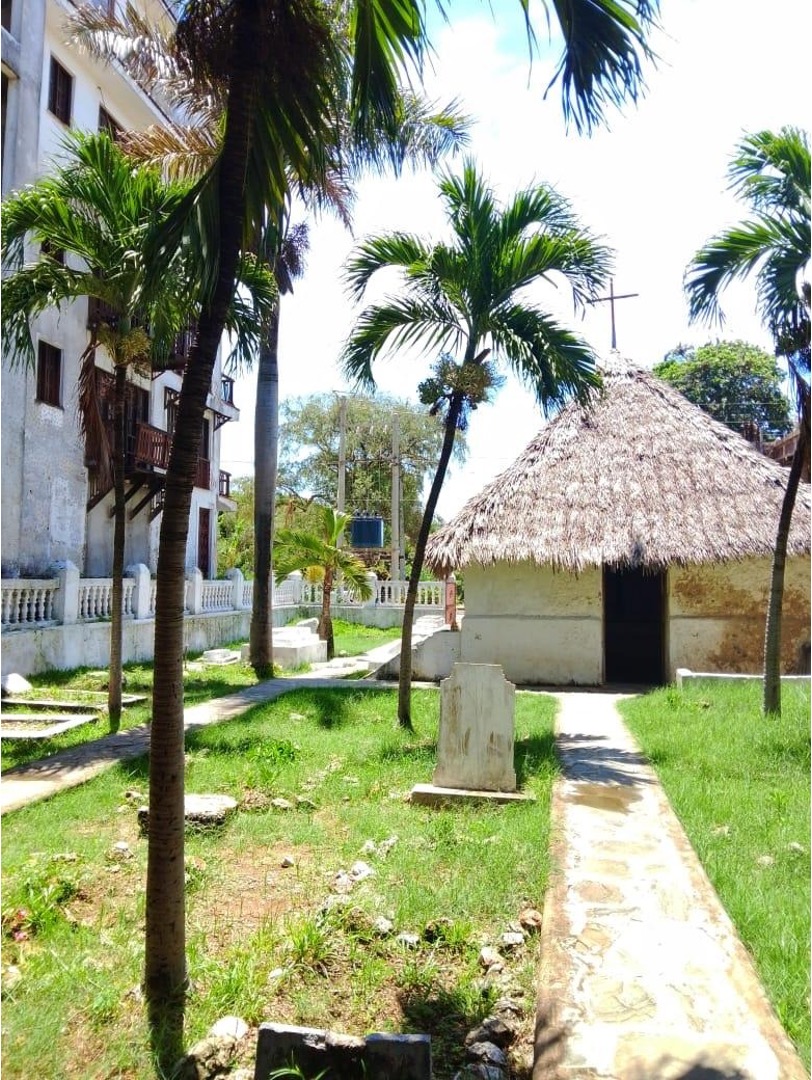
Upon the arrival of early Portuguese colonisers such as Vasco da Gama’s fleet, the first evidence of European influence emerged. Among these are the Vasco da Gama Pillar and the Portuguese Chapel built in 1498 and 1505 respectively. The Vasco da Gama Pillar, a large lime and coral pillar, was erected when the fleet stopped along their journey to India. It signified an important trade agreement, and later became a landmark for sailors. Portuguese influence and colonialism continued from this point on, and is evident both above and below the water. Underwater cultural heritage reminds us of this seafaring history, notably through the Ras Ngomeni shipwreck, which is currently being researched by the National Museums of Kenya's Underwater Cultural Heritage team.

Preserving this heritage is essential to understanding the culture of Malindi Bay today. Its accessibility to the coast, similar to other East African coastal areas, was its strongest advantage, allowing the establishment of coastal settlements and prominence in global trade. Settlements like Malindi Bay have stood out as uniquely multicultural communities for over 2000 years as a result of the interpenetration of cultures assimilating the East African coastal peoples into the international community.
Recognizing the need to pass the ancient skills and techniques in construction for sustainable structural conservation to future generations, National Museums of Kenya opened a regional Museum in Malindi in 2024. The museum is in the House of Columns, a historic building and prominent example of traditional Swahili architecture, reflecting the timelessness of the town whose culture it holds.
The museum is a central place for community memories. It contains documents, local histories, and Indigenous knowledge, most of which are connected to Malindi's interaction with the sea. Content created out of these activities is on display at the Museum for residents and visitors to learn from. The Museum also hosts a gallery on the Ocean and marine biodiversity in English and Kiswahili, and besides it there is a fossilized fish, 'the Kenyan Coelacanth', which was caught 20nm off the coast of Malindi. The history of Malindi Bay cannot be separated from its relationship to the Ocean, and this is represented in the Museum’s contents and the stories it tells. In the museum, our Ocean Literacy shows people, their heritage, and the ocean are inseparable. That the ocean influences us and that we influence the ocean is an unquestionable fact here — and it is essential we represent the community’s perception of this, here.

The shaping of Malindi Bay not only comes from its cultural dynamism, but also from the natural water sources that surround it that physically sculpt its natural boundaries. Surrounding Malindi Bay’s archaeological sites, are also important areas of natural heritage. Malindi bay is home to the Sabaki River Estuary, leading to Kenya’s longest river. Traversing long distances, the river regularly erodes and deposits sediments whose contents would speak of a journey of many miles from various points upstream. Sedimentation has continuously transformed the coastline, with depositions causing the sea to recede, creating riparian land, sand dunes, some shifting southwards with the direction of the wind. This has submerged built structures like homes, mosques, wells, influencing human use of the coastline. As the rainy seasons arrive, sediment discharge also follows and discolors the once blue and serene sea to a shade of reddish brown. This, when in contact with coral reefs in marine parks in the area can negatively affect marine biodiversity.
To combat this and other marine issues, Malindi Marine National Park & Reserve, also known as "The Coral Garden”, was the first Marine Protected Area in Kenya in 1968, and was recently designated as a biosphere reserve under UNESCO's Man and Biosphere Reserve. Here, the community can work with managers to protect both their heritage, and their environment.
The diverse historical influences on Malindi Bay have continually shaped how its people have engaged with the sea. What was once a centre of intensive trade, once guided by monsoon winds and regional exchange (and extraction), has more recently evolved to a growing emphasis on tourism and marine conservation. I am in the privileged position to view this change as a museum curator, bringing together archaeological traces, local histories, and material heritage to tell stories about the past. It is clear to me that these shifts emerge not as isolated moments, but as part of a longer continuum of changing relationships with the ocean. Understanding this evolution is central to Ocean Literacy: it allows us to read the past not as something distant, but as a constantly evolving foundation for making more informed and sustainable choices about the future.