
We lived in a world of quiet strength and loud silences. It was a patriarchal landscape where the men held the staff of authority, yet it was the women who wove the soul of the community into every basket and whispered it into every evening meal. I grew up understanding that heritage is a living thing, an invisible thread connecting the ancestors to the unborn.
My path to researching in Lamu began with a childhood immersed in my grandmother’s stories. These stories ignited a lifelong passion for understanding how culture shapes identity and a critical awareness of the ways women are often marginalized within patriarchal societies. This interest matured during my higher education into a specific focus on the intersection of gender, power, and development, leading me to question why large-scale projects often result in unintended negative consequences for women and their heritage. It is usually because these projects are typically designed and implemented without a gender-sensitive approach, perpetuating existing power imbalances and patriarchal norms. These projects frequently overlook the fact that infrastructure is not gender-neutral and that women and men have different needs, roles, and usage patterns. In 2020, upon inquiring about research opportunities, my PhD supervisor encouraged me to focus on the Lamu archipelago due to its rich Swahili culture and UNESCO status, while also highlighting the looming impact of the LAPSSET Port Project. A formative visit in 2021 solidified this mission, as I observed the vital role of intangible heritage in community cohesion and felt a personal responsibility to investigate how industrial development affects the lives and legacies of Lamu’s women.

Now, my journey as a researcher has led me to the ancient, salt-scented streets of Lamu Island, Kenya. Here, the "soul" I once knew in the hills find sits reflection in the turquoise mirrors of the Indian Ocean. But as I walk the narrow limestone alleys, I see a new tide rising, one made of concrete and iron.
A shadow now stretches across the archipelago: the Lamu Port. This titan, born from the Lamu Port-South Sudan-Ethiopia Transport Corridor (LAPSSET) project, promises a "catalyst for change" through trans-shipment hubs and regional integration. To a developer, it is a map of pipelines and deep-water berths. To me, a daughter of a patriarchal society, these rising cranes look like new staves of authority, and I wonder whose voices are being drowned out by the engine’s roar? During my data collection process, I sat with Mzee Omar, a master dhow-builder1, whose hands were as weathered as the teak he carved. Between the rhythmic thwack of his adze2, he spoke of a sea that was changing. Dhow-building is a centre piece of intangible cultural heritage (ICH), a local skill and historical knowledge passed through bloodlines. This is the essence of Ocean Literacy: an innate understanding of how the sea influences us and how we, in turn, influence the shore. "The port speaks of speed," he told me, "but the wood speaks of time." As the industrial noise grows, the melodic craftsmanship that guided Swahili trade for centuries risks becoming a silent ghost.
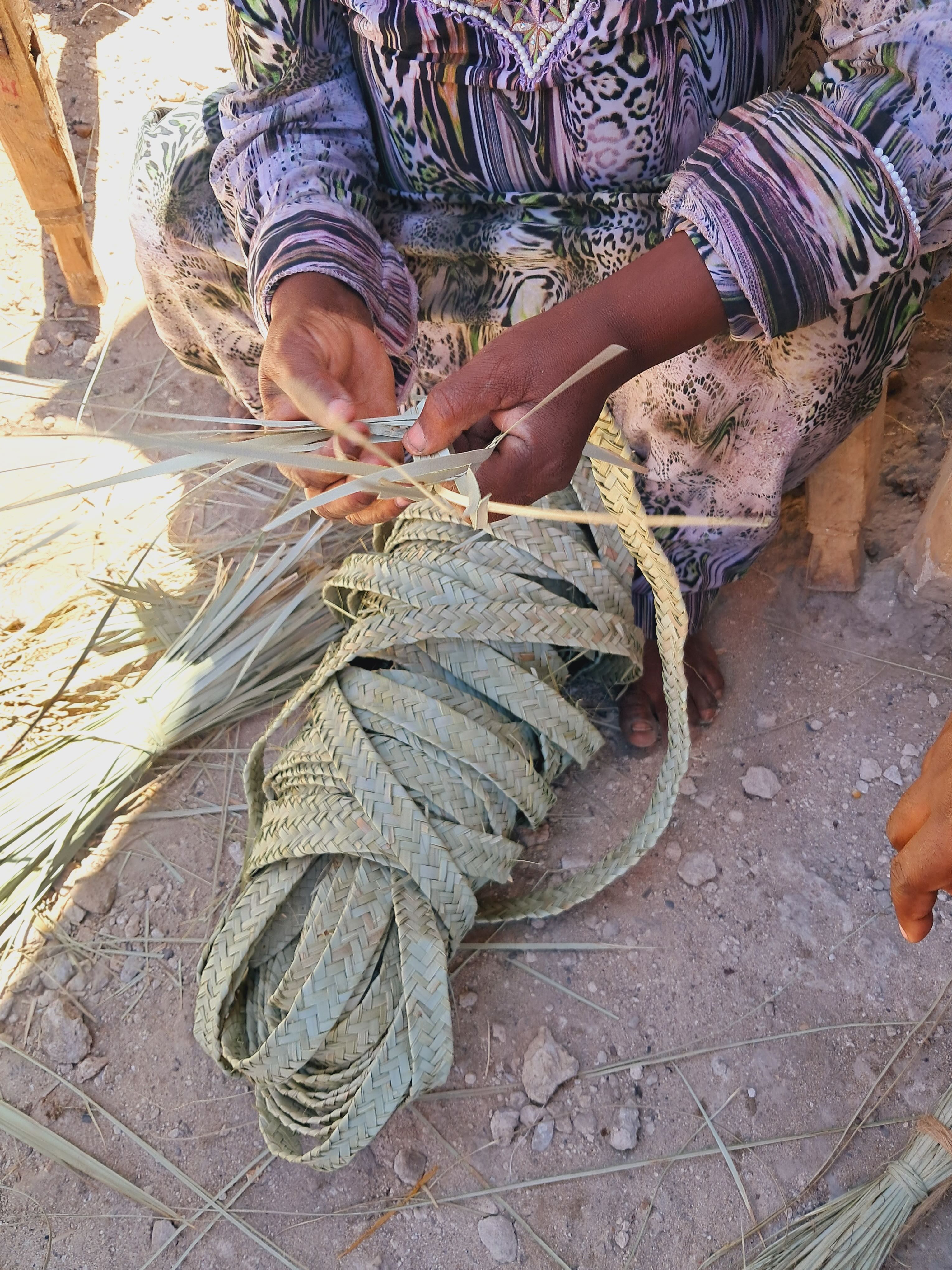
In the traditional Islamic community of Lamu, gender roles are as defined as the monsoon winds. In the public square, the sea is often a male domain, yet my thesis led me to the informal marketplaces where women like Mama Fatuma trade sun-dried fish. Her knowledge of the lunar cycles and the best estuaries for fingerlings is a vital, yet overlooked, form of maritime wisdom. These women are the primary conduits of the stories and social practices that define the coast. They fear that a "masculine" economy prioritising heavy industrial labour will displace the delicate, heritage-based roles that have allowed women to anchor their families for generations. If we do not actively centre gender in these development spectra, the port may be full of ships, but the community will be empty of its history.
Walking through the mangroves with a group of young girls, I witnessed the transmission of ocean literacy in its purest form. They sang traditional songs that identified which roots held the spirits of the ancestors and which sheltered the mud crabs. This expression is the heartbeat of the marine cultural landscape. As dredging for the port begins, we aren't just losing trees; we are losing the classroom where these girls learn their identity. When development ignores these "invisible threads," it erases the very people who carry the community’s salt. Furthermore, the water holds more than just the promise of trade; it holds our ancestors. Underwater cultural heritage, the sun-bleached ribs of ancient shipwrecks act as a silent archive of a cosmopolitan past. I spoke with a local diver who found pottery shards near the new construction site. For him, these weren't just artifacts; they were proof of his lineage. For the community to manage these sites sustainably, they must see themselves reflected in.
The success of the UNESCO capacity-building project in Kilwa Kisiwani and Songo Mnara, Tanzania, serves as my North Star. Once listed as 'in danger' due to neglect and coastal decay, these ancient Swahili sites were transformed through a model of radical community inclusion. By establishing local 'Ruins Committees' and empowering women through initiatives like the WAUMAKI entrepreneurship group, the project proved that heritage is not a static relic to be fenced off, but a living resource. It showed that when international support aligns with the local heartbeat, we can turn the tide of industrial and environmental erasure. In Kilwa, the community moved from being bystanders to becoming the primary custodians of their soul —a map I believe we must follow in Lamu. We have the same choice: to let the "Iron Giant" of the port crush the past, or to invite the community to steer the ship of progress. This is a call for a marriage between the old and the new. Optimism lies in collaboration. By integrating the scientific rigour of maritime archaeology with the lived poetry of the Lamu people, we can ensure that progress does not require erasure. We can build a port that carries our goods, while still honouring the women who carry our soul. The tide is coming in; it has a voice. Let us make sure everyone is there to meet it.

[1] A dhow (known locally in Swahili as jahazi) is a traditional, wooden, lateen-rigged sailing vessel that serves as the cornerstone of maritime transport, culture, and history inthe Lamu Archipelago
[2] An adze is a traditional, hand-heldwoodworking tool used by Swahili artisans for carving, shaping, and smoothingthe wooden planks of dhows (traditional sailing vessels). It is used forremoving heavy waste material, leveling surfaces, and shaping wood, acting bothas a carving knife and a plane. It is vital in crafting the keel and plankingof dhows, leaving a smooth, hand-hewn finish.