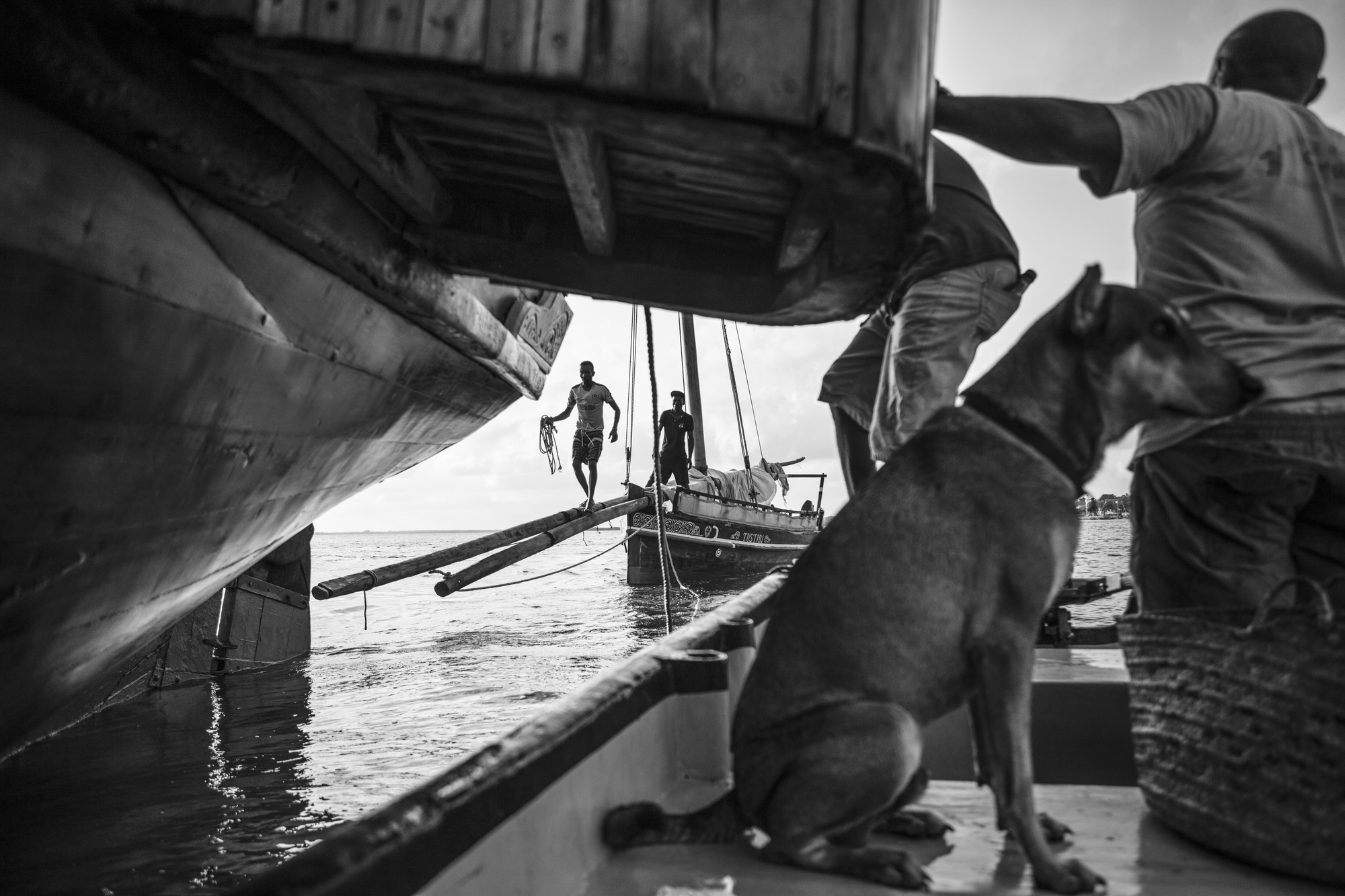

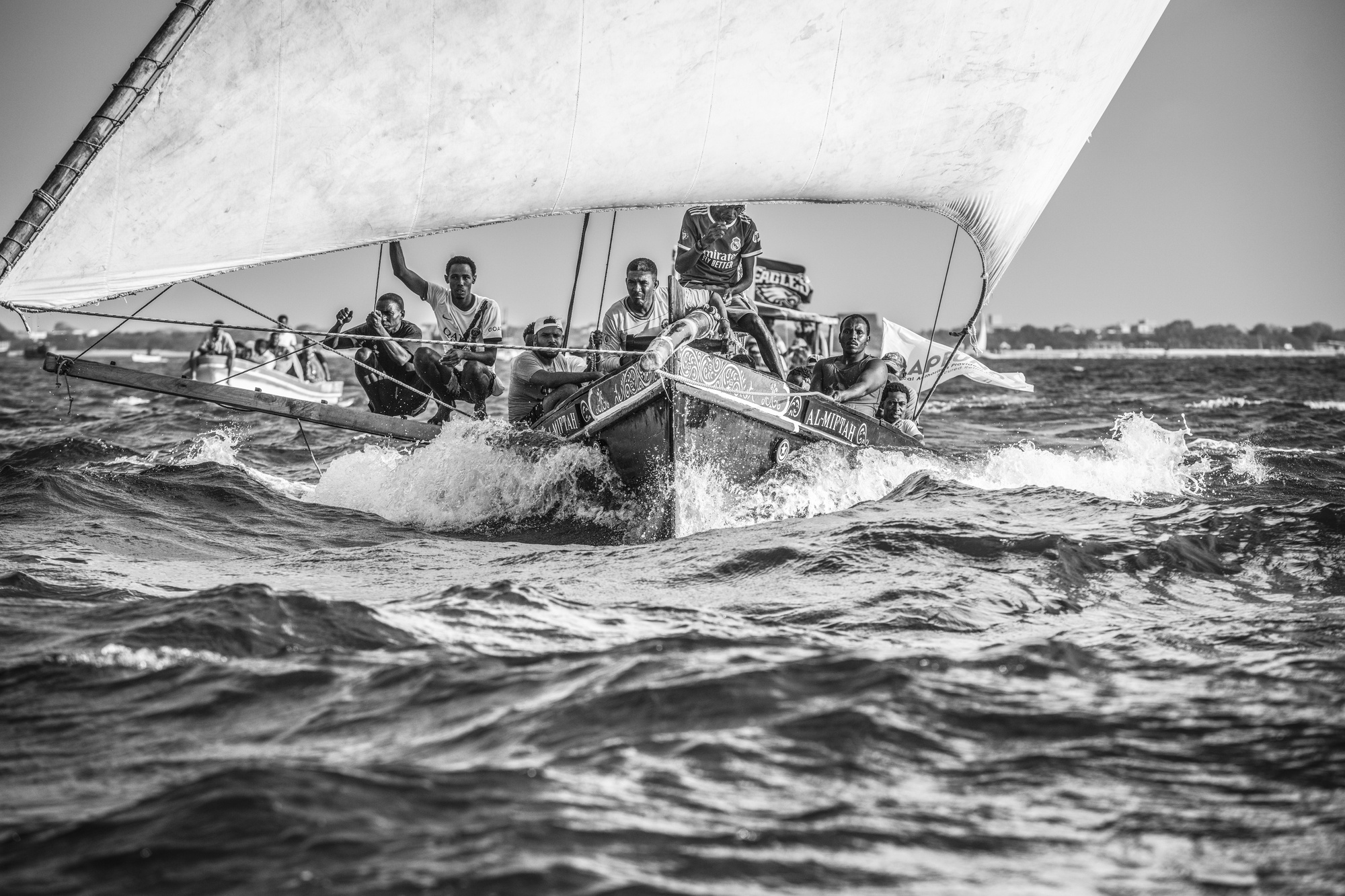
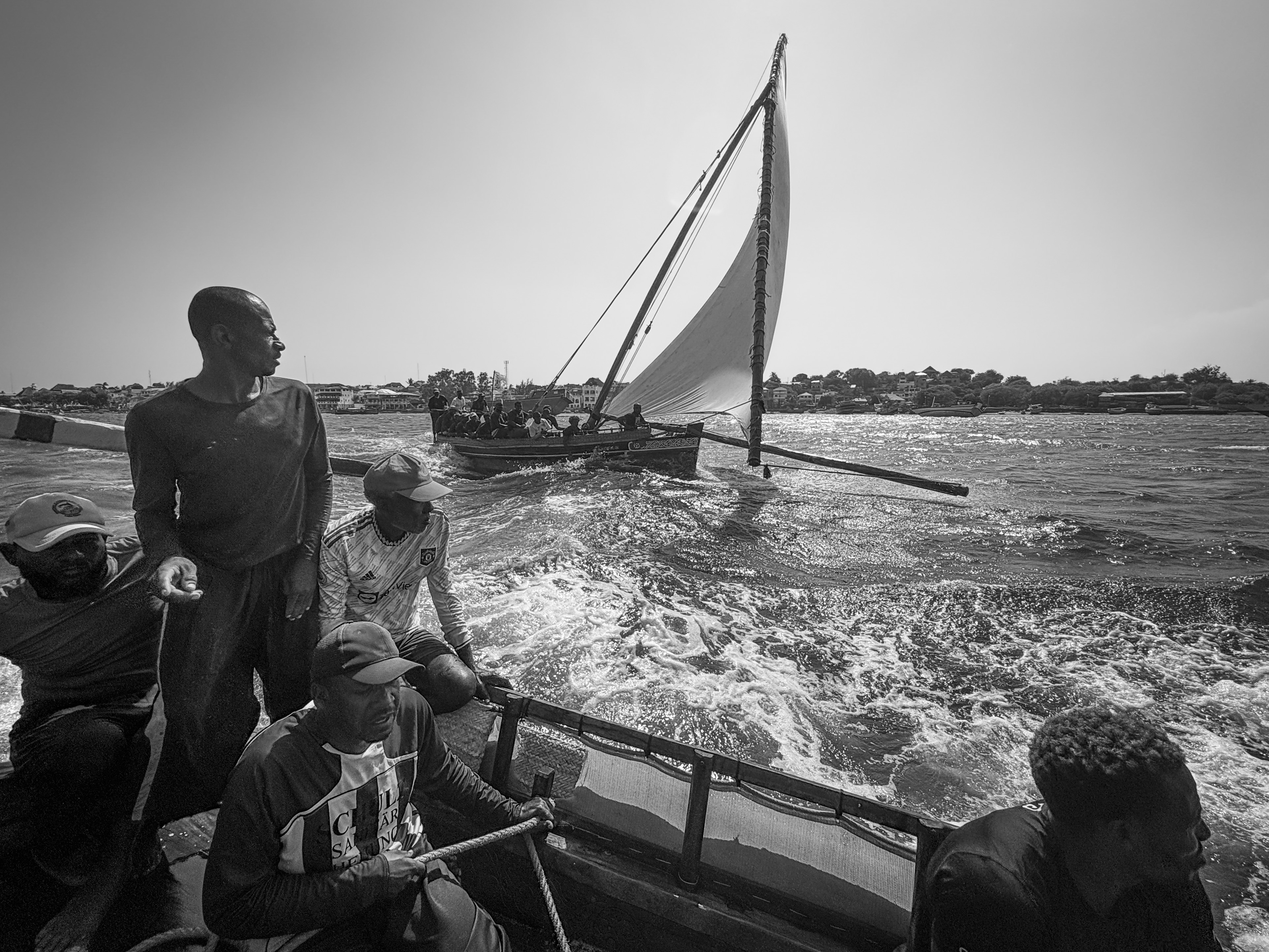
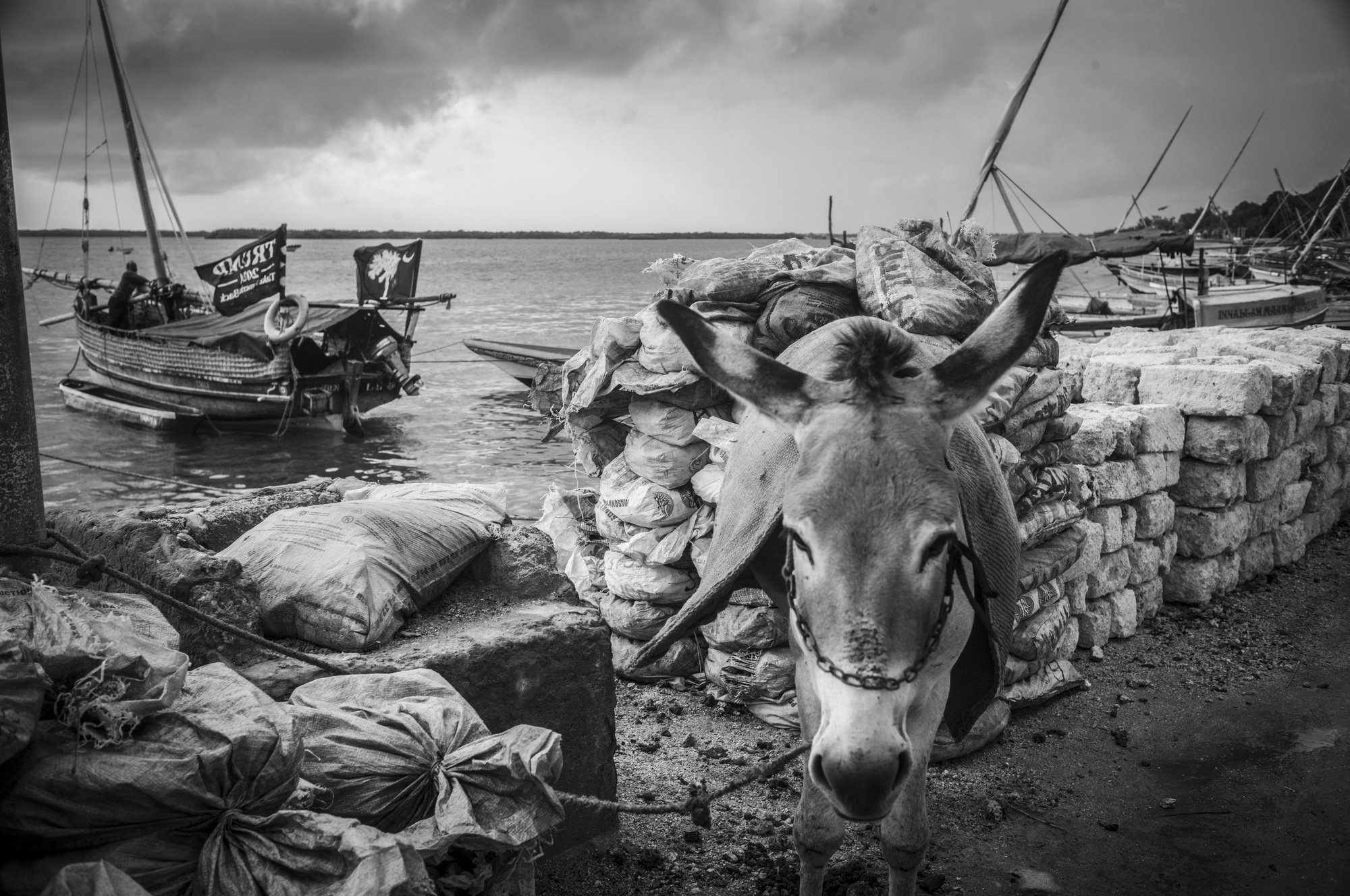
These days, as a documentary photographer, I spend much of my time working in the inland refugee camps and urban slums of East Africa. Over the last decade I have sought refuge from the intensity of these assignments, amongst the dhows of the Swahili Coast. This is one of perhaps only a dozen remaining places in the world where traditional craft carries out genuine commerce under sail.
For much of the eight centuries of Lamu’s existence, it has played a prominent role in Indian Ocean trade networks’ Dhows owe their historical roots to the Oman-Persian-Arabic-Indian coastal communities and boatbuilding traditions. The dhow-based communities on Islands such as Zanzibar, Pemba and Lamu make up perhaps the most obvious and visible proof of early cultural exchange between South Asia and East Africa.
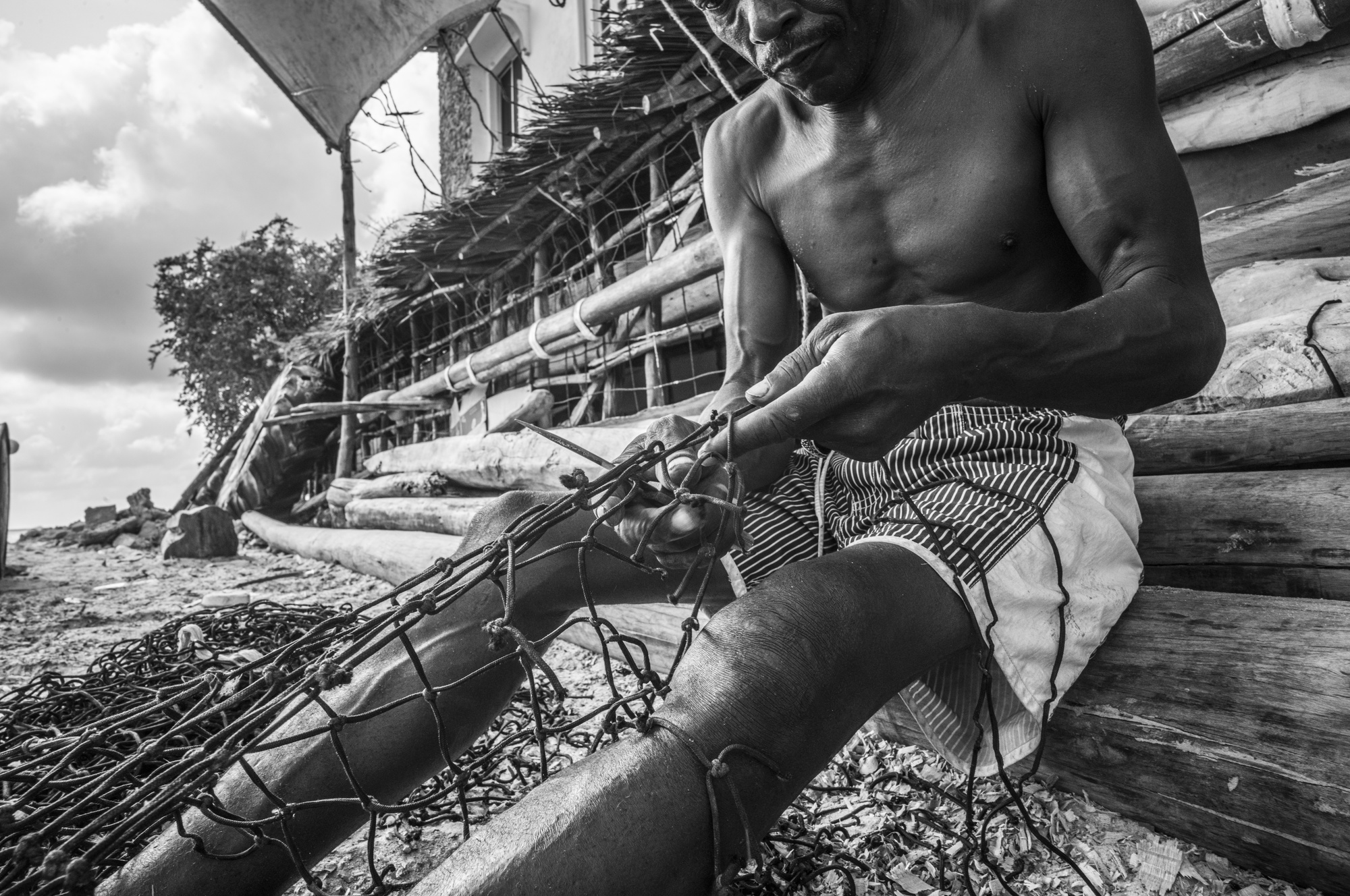
Seeing the spectacular lateen rigs of the Dhows approach from the south, with their soaring diagonal yards, makes my heart beat a little faster. But the rigs are a product of a weather system not a design aesthetic. They are surprisingly efficient sailing across the wind but slow and cumbersome to tack and gybe.
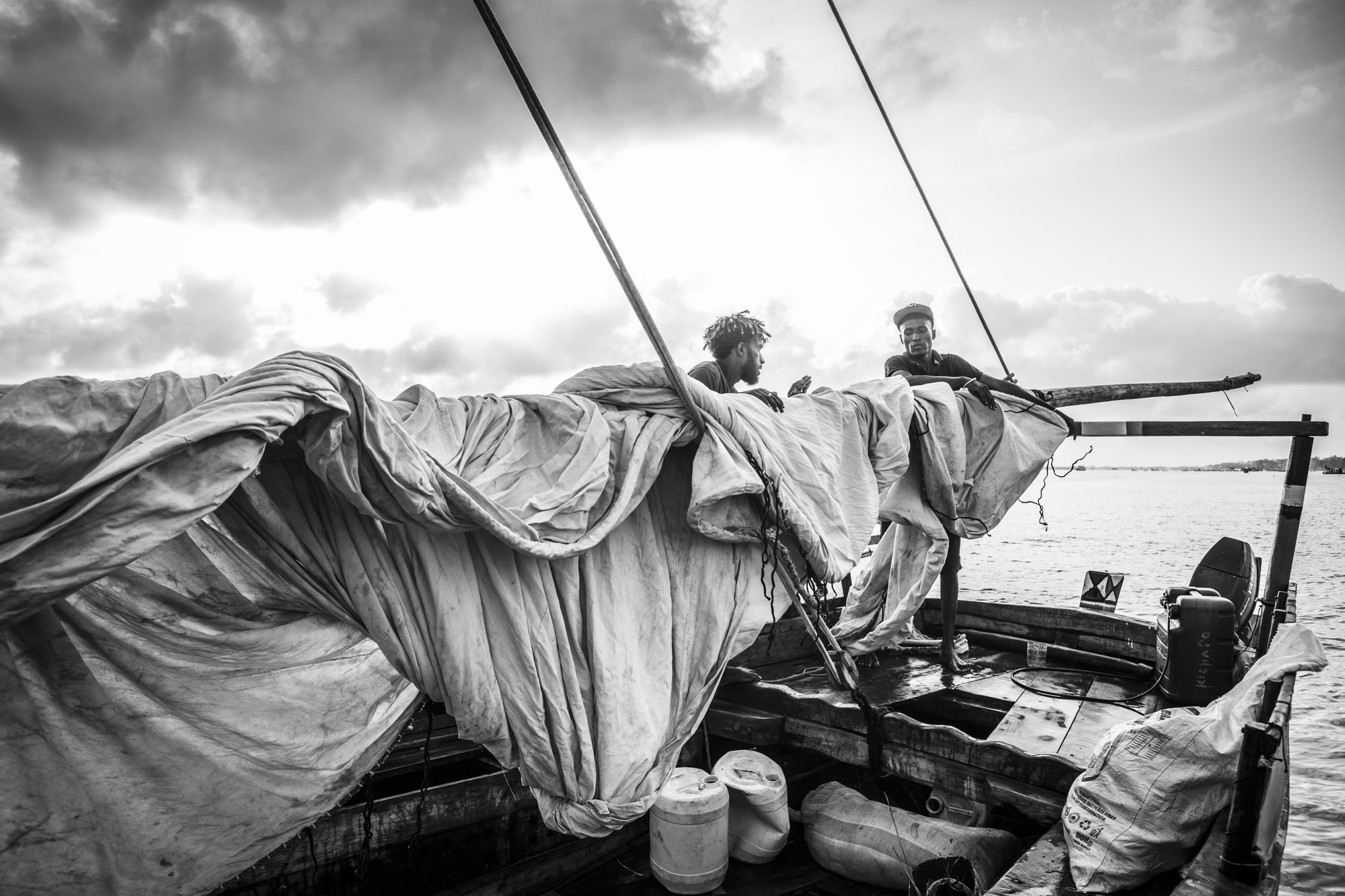
Their evolution is the result of the two annual monsoons. A dhow sailing south from Arabia, on the Northeast monsoon or “Kaskazi”, between November and March, would tack once at the end of its journey and return north between April and October on the southwest monsoon, the “Kusi”. Historically, on the outward journey it might carry dates, ceramics and glass wear. Returning the hold would be filled with ivory, gold and enslaved people.
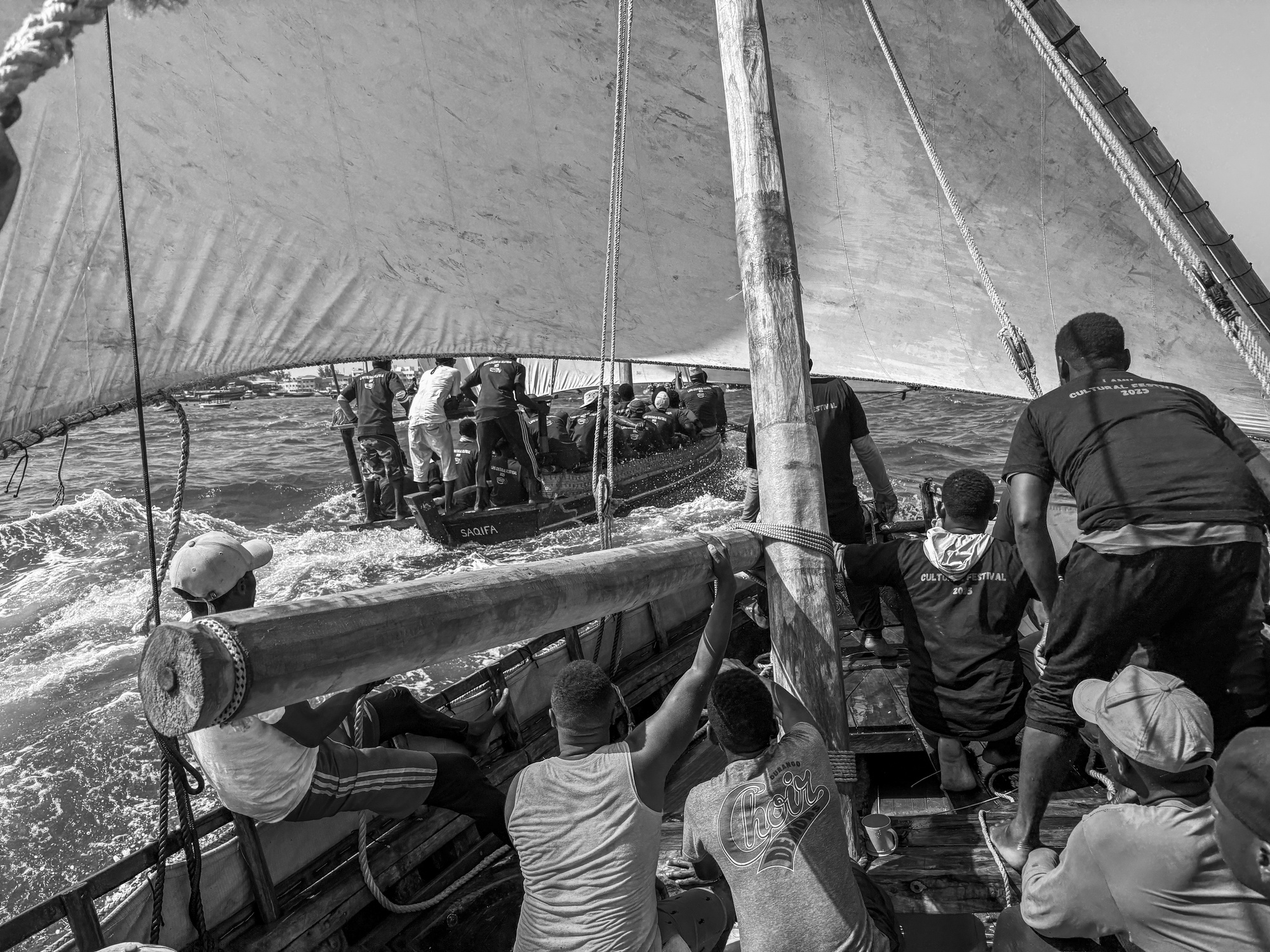
Most of Lamu island is unliveable, consisting of mangrove swamps and muddy channels and the core of the population gathers around the eastern coast between Shela in the south and the northern boundaries of Lamu town. However, there is one small village on the northern, protected coast called Matondoni, and I was told that it was here, that a traditional Dhow building craft and culture was still going strong.
Arriving at Matondoni we wandered up the solid coral jetty and along a beach to where a 35ft Dhow called SWABRINA was approaching completion. I was introduced to Saromala, the craftsman, or “Fundi” in Swahili, and through broken English and much sketching in the mud, I managed to learn the following.
SWABRINA is about 35ft long. She is being built on commission for a local businessman to transport coral blocks and sand and hence is a fuller shape in her bilges, compared to a craft that has been designed for carrying passengers. There are no drawn plans, and all construction is done by eye alone.
The ribs are fashioned from the local mangrove and can be made of up to three pieces scarfed together from port to starboard gunnel. The planking is African Mahogany and comes from Kililana, not far away on the mainland. The stem is “ironwood” (“for banging into things”) and the keel is a timber called Mwangati, Juniperus procera.
The planks are bent by coating them in diesel, setting fire to them and shaping them while they are burning. As soon as they are roughly in position the fire is extinguished and the plank is fastened using nails made by an eighty-five-year-old local blacksmith called Hussein. He starts with leftover concrete reinforcing bars from local building sites. He looks unwell. He has inhaled a lot of charcoal fumes over the years. No one else in the village has learnt the skill from him.
To fasten the planks, a hole is drilled with a hand tool powered by a bow. The head is countersunk with a couple of blows from a half-moon chisel, the iron nail is hammered in until just the head protrudes, cotton is wrapped under the head and then she is driven home. This is then covered with a red compound made of a mixture of fine sawdust and antifoul. The cost of the boat when finished is about 1.5 million Kenyan Shillings or about $18,000 AU, and this includes spars, sails, anchors rigging etc. It will take about 6-8 months from order to delivery.
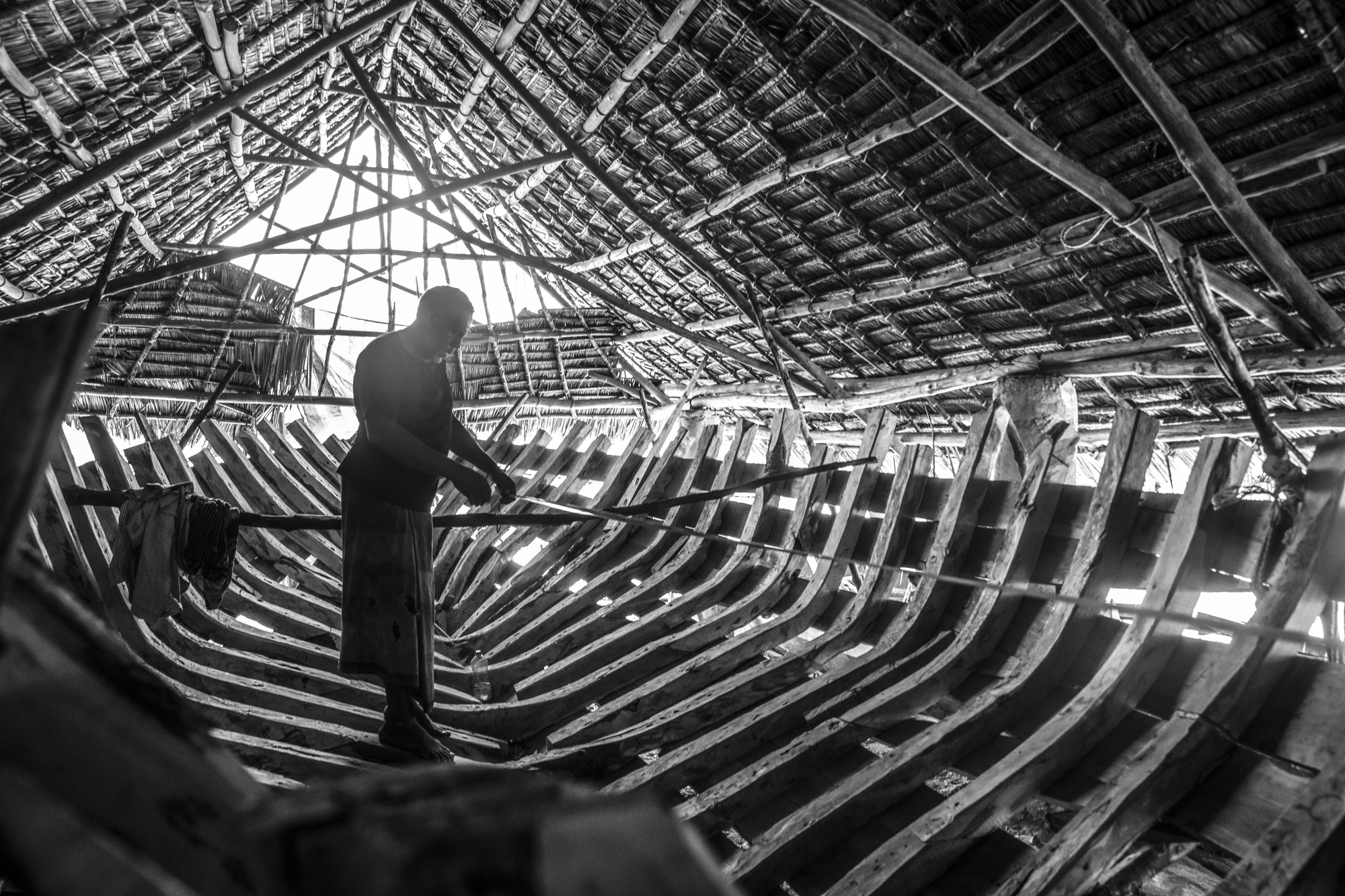
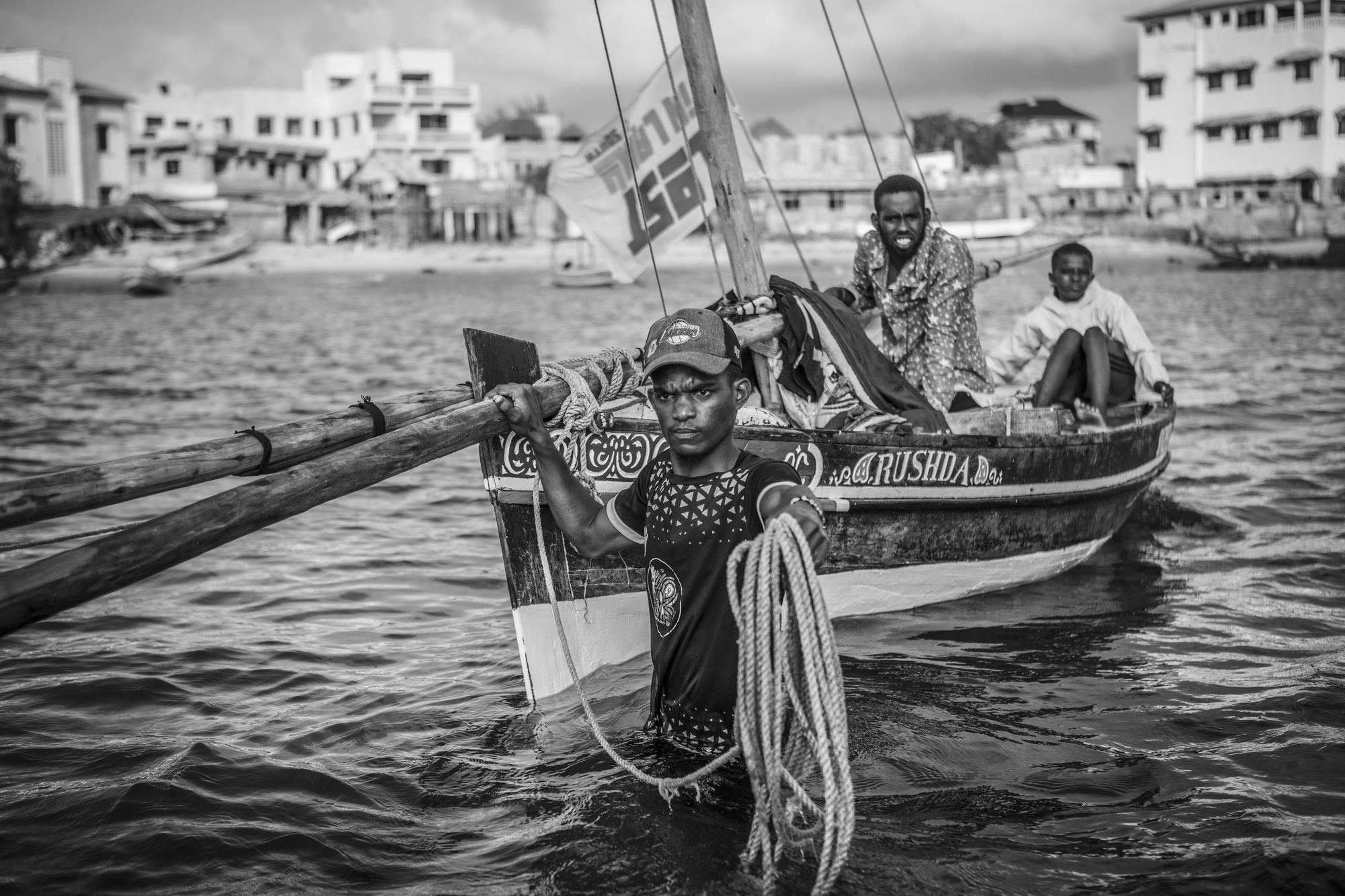
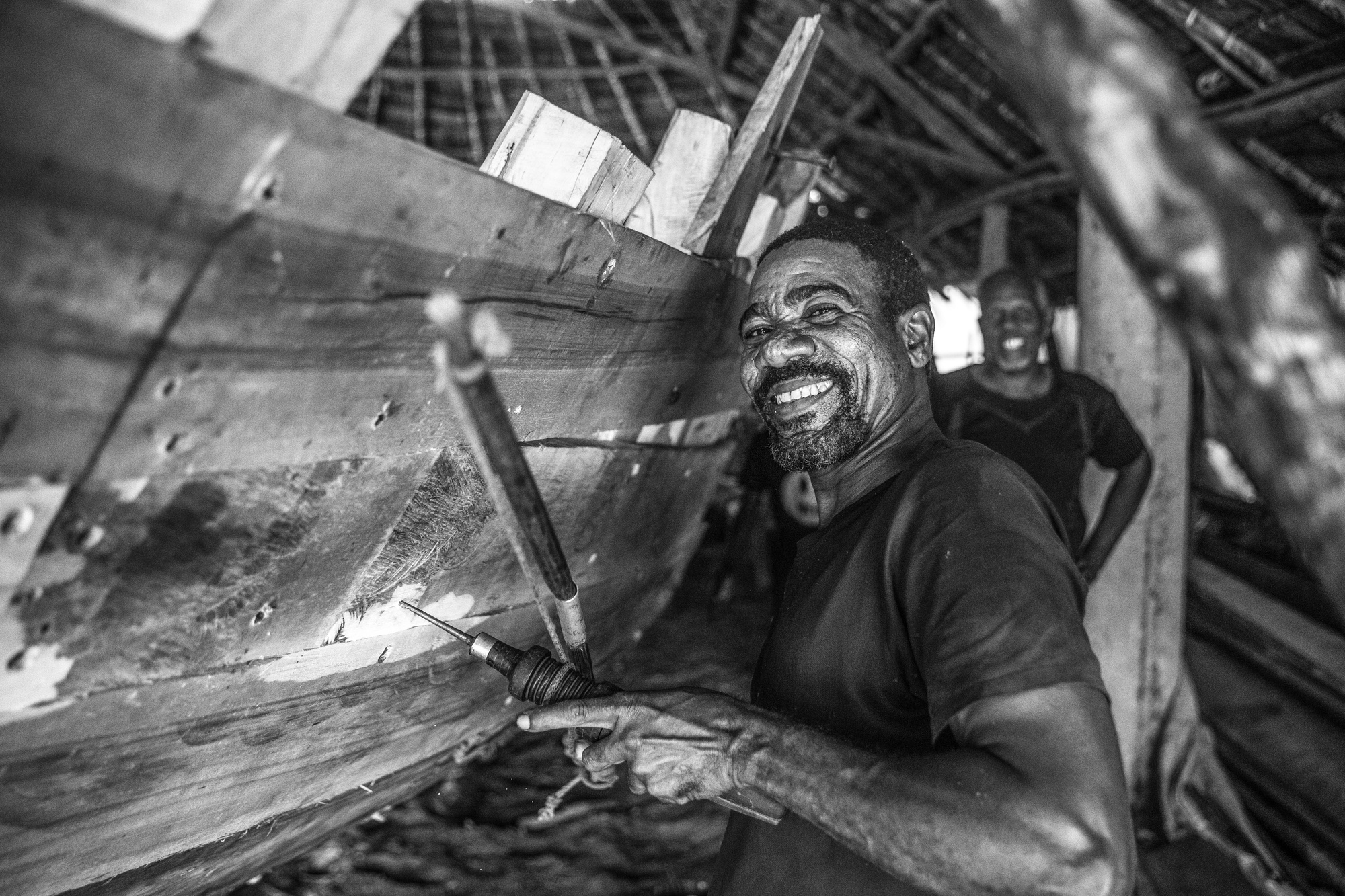
The following day, early in the morning to beat the heat, I started walking south along the coast from Lamu Town towards Shela. Just above the tide line there are some thatched open sided working spaces with sand floors, and inside of one of these I found Fundi Shelal, working at his shipwright business called Jokali Lali. He was obviously an expert and like shipwrights the world over, was cautious of the time drain of the passer by who wanted a chat. But when he realised that I was serious, and cared about his craft, he put down his tools and gave me his full attention.
He described the boat he was building to me as “Mozambique style”. This means that it was an elegant double ender, with more beam and less draft than the local designs. This boat has been commissioned by a local Kenyan to take tourists out for sunset dhow cruises and therefore is built with more comfort in mind.
I liked Shelal. His quiet expertise was apparent in his manner, and the way he directed his apprentice. He had a comfortable authority. If I was ordering a dhow for myself, he’s the man I would go to.
Those of us who appreciate the magnificence of the dhows from the comfort of our privileged lives, face a dilemma. The boats are an ancient solution to the difficult problem of earning a living on the water. Of course, the sailors love their craft and appreciate the skills and traditions that go into building and sailing them. But at times they are labour intensive, cumbersome, dangerous and not always well suited to the contemporary tasks they are asked to undertake. Expecting that their usefulness as working boats will continue, just to please our romantic notions of authenticity, seems arrogant. In many cases, a simple fiberglass runabout with an outboard engine would make their lives so much easier. How we maintain the culture of dhow sailing while improving the lives of those who rely on them, is a problem worth addressing.
Realistically, the long-term survival of a living culture and practice of sailing dhows in this part of the world will rely on two activities. Racing the boats within the wider Lamu community will ensure that they are built, maintained and sailed much as they have been for millennia. As their usefulness as transport and fishing vessels diminishes under pressure from engines, the knowledge and experience of the Fundis and the dhow captains will be maintained by the pride in being crowned this year’s “champion”.
Secondly as the Kenyan Tourism industry begins to grow again, after a decade of stagnation, there will be more tourists searching for “authenticity” in their travel experiences. If done with sensitivity, the dhow sailors can provide this, sharing their intangible cultural heritage with a worldwide audience, ensuring that the East African lateen rigged dhow, is not just an ornament in a museum, but a living and floating example of an ancient maritime history.