

It is something you learn long before you have words for it. In Zanzibar, Ocean Literacy is lived. It is carried in bodies, shorelines, songs, and kitchens where food is one of its most enduring storytellers. Ocean Literacy reminds us that to be ocean literate is to understand the Ocean’s influence on us and our influence on the Ocean. Here, it is an understanding embedded not in textbooks, but in everyday practice.
While I was conducting ethnographic fieldwork with women, chefs, and small-scale fishers along the shores of Zanzibar in 2025, Kaziah reflected, “to me, because ocean has so many things happening in it, I would say it’s like a house. And a house is about a woman… Mother protects the house, takes care of the children and even the father, mother must make food. Thus, I can say ocean is a woman.” This understanding of the ocean as a feminine, nurturing force echoes across Indigenous and coastal knowledge systems, where ecosystems are not abstract resources but relational beings [1]. In Zanzibar, this relationship is expressed most clearly through food.
For Kaziah, born and raised in Pemba, the ocean has shaped her life from childhood. “I started going to the ocean when I was young, I was going to the ocean with my elder family members to fish,” she says. “When we got fish, we used to sell some and keep some for food… I continued with fishing until I got married, now I have kids and I still fish.”
Her first encounters with the sea were marked by fear. An emotion often absent from romanticised coastal narratives. “I was scared at first… you will cry, run away, but finally you get used to it. Even adults do fear sometimes before getting used to it”. This embodied learning, whether fear, love, adaptation, or skill, reflects what scholars describe as sensorial and experiential knowledge [2]. Ocean Literacy in Zanzibar is not taught as it is absorbed through the everyday repetition and necessity of coastal livelihoods.
Kaziah mostly harvests oysters and octopus, working in groups of women who walk the shore together. Fishing pays school fees, supports extended families, and sustains daily life. Yet she has witnessed a troubling shift. “Oysters are reducing at a very high rate than before,” she explains. “They are few and fishermen are many”. Seasonal rest, once practiced to allow fish stocks to recover, has been eroded by economic pressure. “Nowadays… people are fishing throughout the year,” Kaziah says. “When you tell them to rest, they feel you are giving them negative advice because they have children to feed.” This tension reflects wider debates around food sovereignty and sustainability, where knowledge of ecological care exists, but structural constraints limit choice [3].
From Sea to Stove
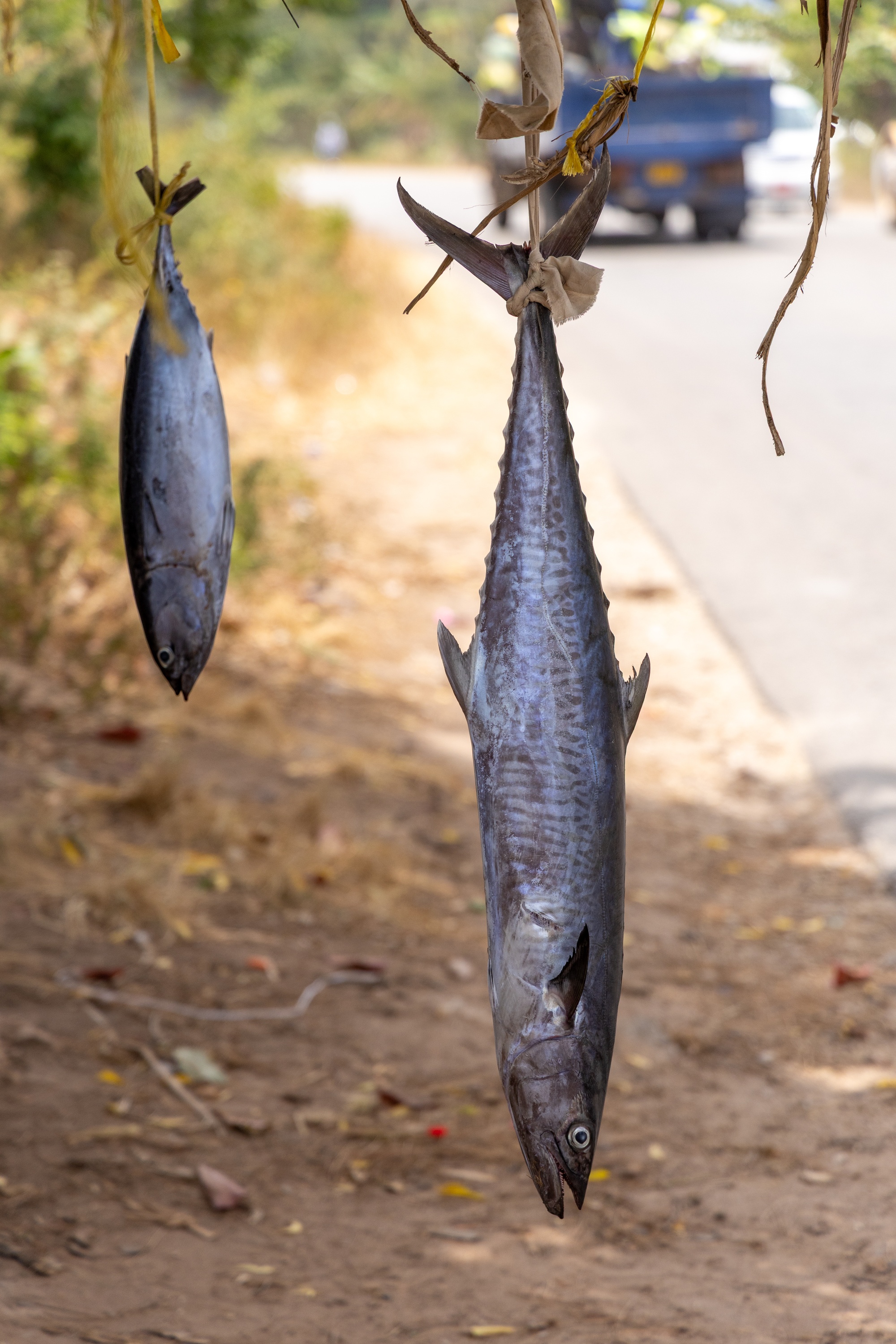
Once seafood reaches land, another form of literacy takes over. Cooking in Zanzibar is not just about preparing food. It is intergenerational transmission. “I learnt from my mother,” Kaziah says of cooking octopus. “You boil it until it is ready… then add spices and eat like that.” These practices align with research showing how traditional food knowledge is passed through observation, correction, and participation rather than formal instruction [4]. Even when her daughter cooks, Kaziah remains closely involved. “I must guide her… I must taste it frequently,” she admits.
Food becomes a site of memory, identity, and care. This is especially noticeable during religious and communal moments. During Ramadan, kitchens transform into shared spaces of labour and generosity. “You prepare porridge, tea, juice… then the family members join and eat together,” Kaziah explains. “You continue with the other dishes… until all the food is finished.” Such moments illustrate how food functions as intangible cultural heritage. One that is lived, practiced, and renewed daily rather than preserved as static tradition [5].
Not all Zanzibar residents fish, yet many remain deeply connected to ocean foodways. Zuleyha, a small business owner, buys seafood from the market. “We buy our seafood,” she says. Still, the emotional significance remains strong. “Everyone in my family loves Octopus,” she explains. “My son usually suggests that we cook coconut rice alongside octopus soup…Most times we all eat together as a family. The kids enjoy when we all eat together.” Yet Zuleyha notices cultural shifts. Children no longer play traditional games by the shore. “In the past we grew up playing local games… today most kids are on their phones,” she reflects. Research suggests that when everyday practices disappear, food heritage becomes vulnerable. This is not because recipes are forgotten, but because contexts of learning are lost [6].
At Roro’s Beach Bar and Seafood, the ocean enters Zanzibar’s food system through commerce. Manager Mpangara explains: “As you see, we are nearby the ocean, so we’re just dealing with seafood also.”
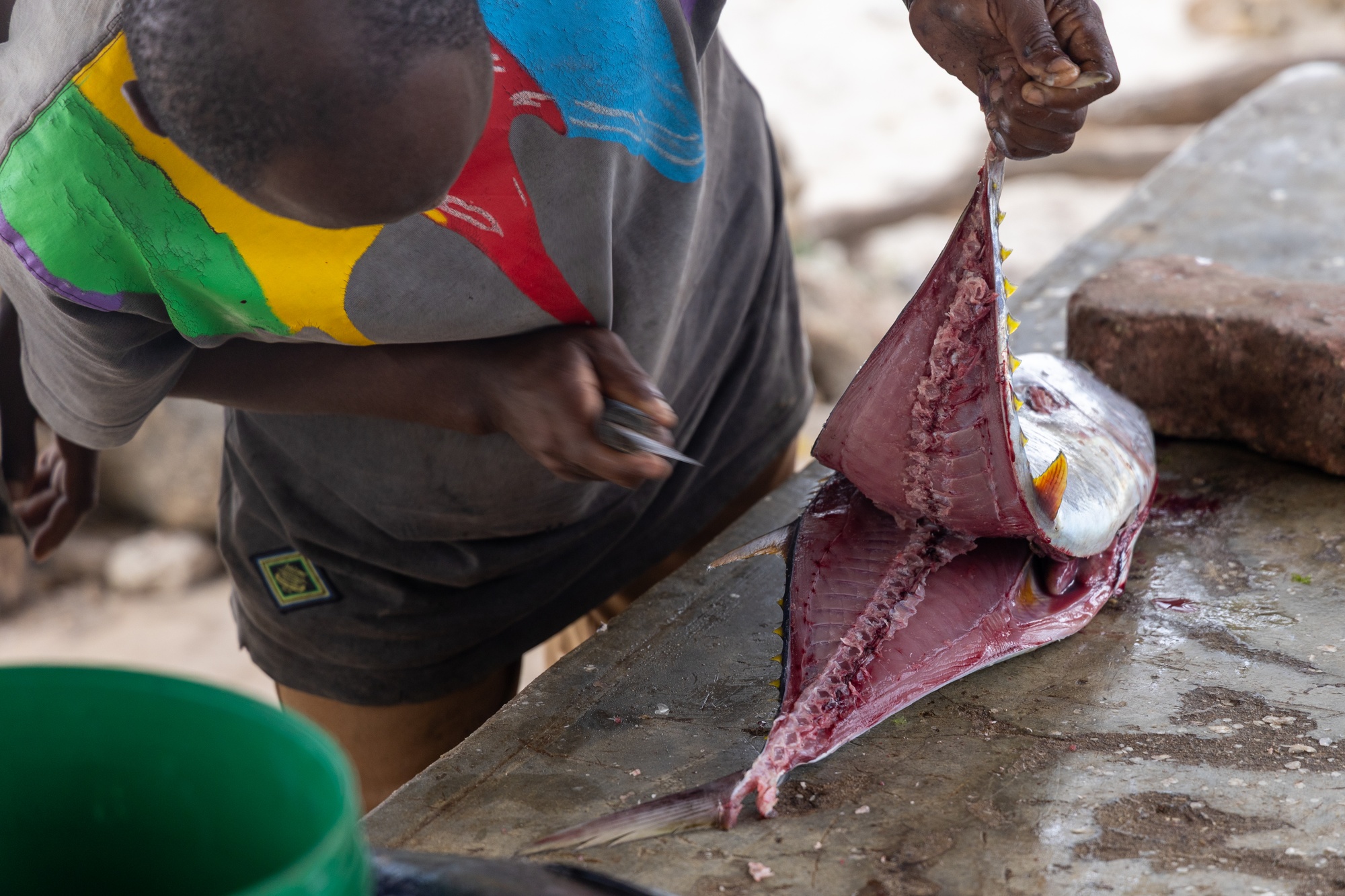
The restaurant serves traditional dishes such as Makange ya Changu (fresh snapper fish stir-fried with onions, tomatoes, and vegetables) sourced from ferry fish markets supplied by Tanzanian fishermen operating in the Indian Ocean. Restaurants like this reflect how food heritage adapts to tourism and urban growth, echoing research on contemporary adaptations of indigenous cuisines [7]. Yet continuity remains. “Cooking with coconut milk… this has been since ancient times,” one respondent notes.
Where Fishermen’s Knowledge is Stored
Food heritage and knowledge in Zanzibar is preserved through everyday cultural practices, oral traditions, and communal labour. One of the most important ways this knowledge is transmitted is through song. In coastal fishing communities, songs sung during fishing activities serve as both a coordination tool and a medium through which ecological knowledge, cultural values, and livelihood wisdom are shared across generations.
For example, fishermen often chant while pulling in nets, creating a rhythmic exchange between a lead caller and the group:
Captain: Kama hutaki (If you don’t want)
Response: Kinda (Chick)
Captain: Kama hutaki kinda (If you don’t want chick)
Fishermen meaning: Kama huitaki, iuze au uachane nayo (If you don’t want it, sell it, or let it go).
The phrase carries a deeper metaphorical meaning. In this context, the kinda (chick) symbolises a catch, opportunity, or possession. The fishermen interpret the phrase as: “Kama huitaki, iuze au uachane nayo” (If you do not want it, sell it or let it go). Thus, the chant conveys a moral and practical lesson of actively deciding how to value and use what one has obtained. During the physically demanding task of pulling in nets, the rhythm of the chant motivates collective effort while reinforcing shared understandings about labour, responsibility, and the value of the fish.

These song traditions operate as forms of oral pedagogy, as the rhythm, metaphors, and collective participation allow knowledge of food heritage to be remembered, practiced, and passed down through generations. Song becomes both a cultural expression and a living expression of the ecological knowledge that sustains Zanzibar’s coastal foodways.
Why these stories matter
Zanzibar’s food heritage is not frozen in the past. It is adaptive, embodied, and relational. Cassava, bananas, rice, yams. Oysters cooked fresh because “you can’t just put them on the side of the road.” Coconut milk stirred the same way for generations. But pressure is mounting from overfishing, tourism, climate change, and forgetting.
Ocean literacy, in this context, must go beyond scientific facts. It must include women’s labour, markets, songs, beliefs, and kitchens. Thereby, recognising food as both ecological practice and cultural memory [9].
As one respondent said so clearly: the Ocean is a woman. A house. A provider. Thus, safeguarding Zanzibar’s ocean and food heritage means listening to those who already know how to live with the sea. That means supporting women fishers and oyster harvesters; valuing seasonal rest and local food systems; treating cooking, songs, and storytelling as knowledge; and teaching children that the ocean is not just something you visit. Rather, it is something you belong to. The ocean has fed Zanzibar’s stories for centuries. The challenge now is whether we will help carry those stories forward or let them quietly wash away.
References
1. Pascual, U., Balvanera, P., Díaz, S., Pataki, G., Roth, E., Stenseke, M., Watson, R.T., Dessane, E.B., Islar, M., Kelemen, E., Maris, V., 2017. Valuing nature’s contributions to people: The IPBES approach. Current Opinion in Environmental Sustainability, 26, 7–16.
2. Sutton, D.E., 2010. Food and the senses. Annual Review of Anthropology, 39, 209–223. https://doi.org/10.1146/annurev.anthro.012809.104957.
3. Zurek, M., Sanderson Bellamy, A., Lyon, C., Alexander, P. and Withers, P., 2022. Food System Resilience: Concepts, Issues, and Challenges. Annual Review of Environment and Resources, 47(1), 511-536.
4. Divakarla, S.P., Aroni, R. and Sutherland, S., 2020. Transmission of traditional food knowledge: Experiences and perspectives of young adults. Mahika Kai Journal, 1(1), 96-129. https://doi.org/10.34900/mk.v1i1.1155.
5. Zocchi, D.M., Fontefrancesco, M.F., Corvo, P. and Pieroni, A., 2021. Recognising, Safeguarding, and Promoting Food Heritage: Challenges and Prospects for the Future of Sustainable Food Systems. Sustainability, 13(17), 9510. https://doi.org/10.3390/su13179510
6. Kapelari, S., Alexopoulos, G., Moussouri, T., Sagmeister, K.J., Stampfer, F., 2020. Food heritage makes a difference: The importance of cultural knowledge for improving education for sustainable food choices. Sustainability, 12, 1509. https://doi.org/10.3390/su12041509.
7. Oktay, S. and Sadıko glu, S. 2018. The gastronomic cultures' impact on the African cuisine. Journal of Ethnic Foods, 5 (2), 140-146. https://doi.org/10.1016/j.jef.2018.02.005
8. Schellnack-Kelly, I., 2024. Accessing collective memory: The role of oral history in building an inclusive archives reflecting a people’s archives. Collection and Curation, 43(1), 24–29. https://doi.org/10.1108/CC-01-2023-0004.
9. Swiderska, K., Argumedo, A., Wekesa, C., Ndalilo, L., Song, Y., Rastogi, A. and Ryan, P., 2022. Indigenous Peoples’ Food Systems and Biocultural Heritage: Addressing Indigenous Priorities Using Decolonial and Interdisciplinary Research Approaches. Sustainability, 14(18), 11311. DOI: 10.3390/su141811311