

For those who live along its shores, it speaks in currents, winds, stories, and memory. It reads like a text, one that does not appear in books, archives, or research reports, but in everyday life. Fishers assess the color of the water to predict fish movements. Boat builders know the strength of mangrove timber by its scent and weight. Elders recall storms from decades ago and use these memories to explain the rhythms of the sea. Yet when conversations about Ocean heritage begin, these voices are often the first to disappear.
During my fieldwork in the Lamu Archipelago on Kenya's northern coast, I came to understand how differently the Ocean can be interpreted depending on who is listening. I am a maritime archaeologist, and spend a lot of my time on the shoreline engaging with coastal communities. Lamu is a place where the sea is inseparable from culture. Fishing, sailing, mangrove harvesting, and boat building are not merely livelihoods; they are traditions passed through generations, shaping how communities understand and relate to the Ocean. The knowledge embedded in these practices rarely fits comfortably within formal heritage management systems and conservation frameworks. This is the challenge that we, as maritime archaeologists and heritage professionals face.
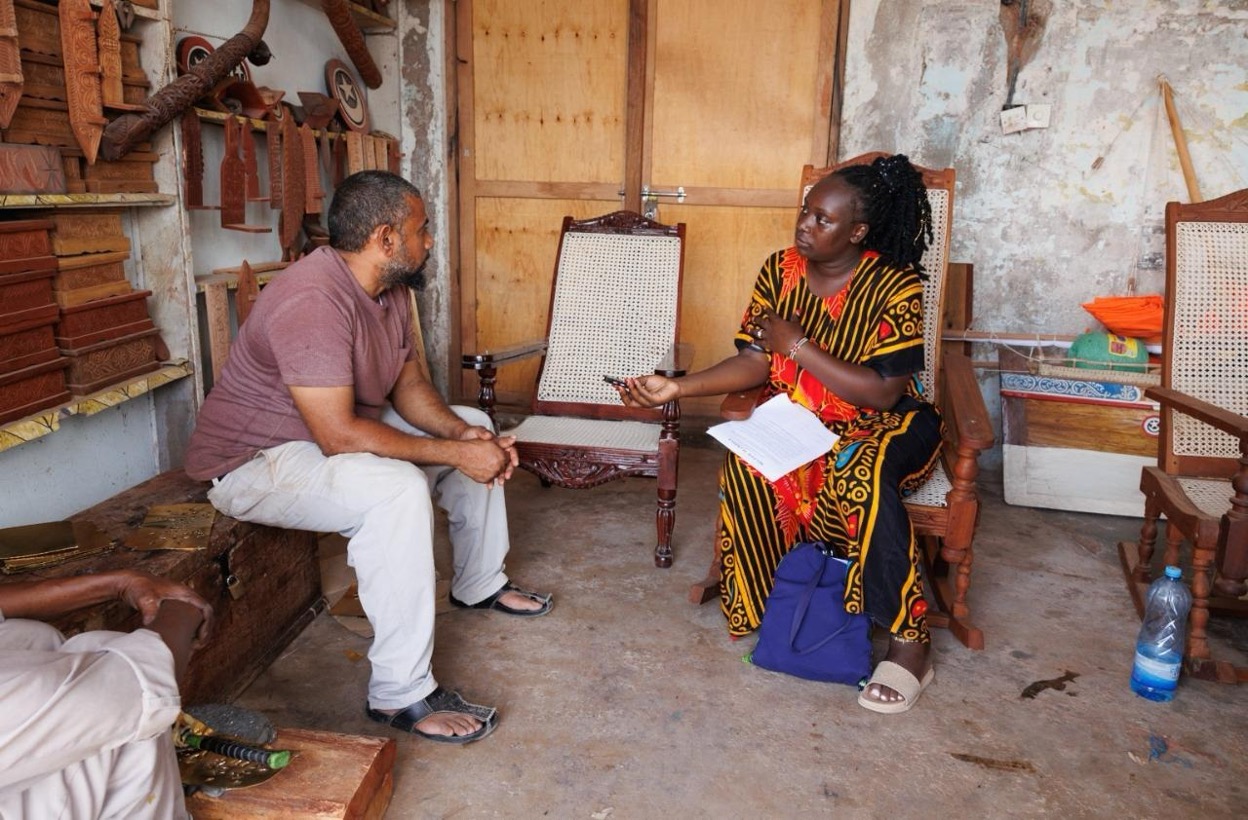
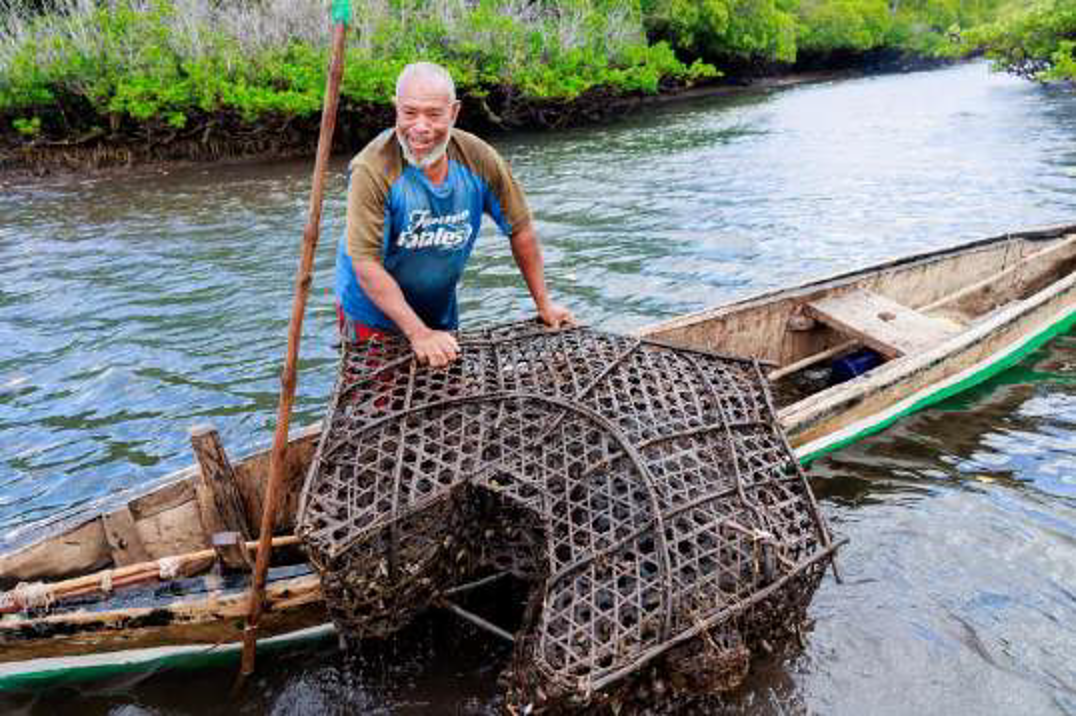
One afternoon, while walking along the shoreline of a small fishing settlement I met Munawara Hassan Ali Skanda, a fisherman in his late fifties who had spent most of his life on these waters. His hands were rough from decades of repairing nets and pulling lines from the sea, and as we sat beneath a simple wooden shelter near the beach, he spoke about the Ocean with the familiarity of someone describing a lifelong companion.
Hassan had begun fishing with his father when he was still a boy. Long before GPS devices or marine charts were available to small-scale fishers, he had learned to navigate by watching the stars, the direction of the wind, and the behavior of birds over the water. For Hassan, the sea was not just a place of work. It was a place of memory.
At one point in our conversation, he pointed toward a stretch of water just beyond the reef.
"There," he said quietly, "that place has stories."
According to Hassan, fishers rarely set their nets in that area during certain seasons. The currents there were unusual, he explained, but that was not the only reason. The place was connected to stories passed down from older fishers; boats that had disappeared long ago, wrecks beneath the water, some spoke of spirits that guarded that part of the sea.
Hassan did not present the story as a myth or superstition. He told it as a matter of fact; something learned from his father and his father before him. The story was part of the knowledge that guided where fishers could safely go and where they should not.
Listening to him, I realised that the story carried more than folklore. It reflected a long history of observation, memory, and cultural interpretation of the Ocean. From an archaeological perspective, such stories might hint at the remains of vessels connected to the centuries-old trading networks of the western Indian Ocean. But for Hassan, the significance of the place was not whether a wreck could be scientifically confirmed. Its meaning was already understood. In Hassan’s words, the sea "remembers."
For him and many others in Lamu, the Ocean is not simply a natural environment waiting to be studied. It is a social and cultural landscape filled with stories, warnings, and inherited knowledge about how people should live in the sea. Yet knowledge from community members such as Hassan rarely appears in official discussions about Ocean heritage.
Formal heritage systems often privilege certain kinds of knowledge; scientific measurements, archaeological surveys, historical documents. These approaches are essential and have played an important role in protecting underwater cultural heritage around the world. But they also tend to treat knowledge as something that must be documented, measured, or verified in order to be recognized.
In contrast, within areas such as Lamu, knowledge about the sea is transmitted differently. It lives in conversations between generations of fishers, in the skills used to read tides and currents, and in the stories that mark certain places as significant. These knowledge systems are rarely written down, yet they shape how communities interact with the Ocean every day.
During my time in the archipelago, I encountered many moments where local interpretations of the sea diverged from official heritage narratives. Sites that conservation plans described in ecological and archaeological terms were often understood locally through stories about ancestors, spirits, and historical events remembered by the community.
In these moments, the Ocean revealed itself not as a single archive of heritage, but as a layered landscape of meanings. What appears to an archaeologist as a potential underwater site may appear to a fisher like Hassan as a place of memory and caution. What policy documents describe as a marine resource may be understood locally as part of a cultural world that governs how the sea should be respected and used. This difference does not necessarily mean that one interpretation is more meaningful than the other. Rather, it shows that the Ocean is interpreted through multiple systems of knowledge, multiple languages, each shaped by different experiences and relationships with the sea.
The challenge emerges when only one of these systems is recognized. Across many coastal regions, Ocean governance is increasingly shaped by large-scale conservation initiatives and the rapid expansion of the Blue Economy. While these efforts aim to promote sustainability, they often rely primarily on scientific expertise and regulatory frameworks. In doing so, they can unintentionally overlook the lived knowledge of communities who have depended on the Ocean for generations.
For fishers like Hassan, this creates a quiet but significant disconnection. People who know the sea through daily experience sometimes find themselves excluded from conversations about how that sea should be protected, managed, and interpreted as heritage. Reflecting that afternoon by the shore, I realized that the question is not simply about documenting traditional knowledge. It is about recognizing that these knowledge systems already function as forms of heritage stewardship. To be truly Ocean Literate, we must learn from these languages of the Ocean.
The stories that guide what fishers should avoid are not random folklore. They shape behaviour, influence how marine spaces are used, and reinforce a sense of responsibility toward particular parts of the sea. Understanding Ocean heritage in places like the Lamu Archipelago therefore requires more than archaeological surveys and policy frameworks. It requires listening.
Listening to people like Hassan, whose lives are intertwined with the Ocean in ways that cannot easily be captured in reports or management plans. Listening to the stories that transform stretches of water into places of meaning and memory. Because the Ocean does not speak in only one voice.
Along the shores of Lamu, if we pause long enough to listen, we may discover that the people who have lived with the sea for generations already hold many of the keys to understanding it.
Further Reading
Abungu, G. (2016). Heritage management and community engagement in Eastern Africa. Nairobi: National Museums of Kenya.
Agardy, T., & Klaus, R. (2000). Marine conservation and fisheries management in the Western Indian Ocean. Nairobi: WIOMSA.
Allison, E., Aswani, S., & Morrison, T. (2020). Human–Ocean relationships in the Indian Ocean: Integrating local knowledge and policy frameworks. Marine Policy, 115, 103854.
Asquer, R. (2012). Conservation and community engagement: Intangible heritage in Africa. Journal of Cultural Heritage, 13(3), 274–281.
Aswani, S. (2019). Coastal human ecology: Traditional knowledge in marine conservation. Coastal Management, 47(4), 362–379.
Chambers, R. (2003). Participatory approaches to conservation: Commonplace heritage and everyday practice. Development in Practice, 13(2–3), 201–212.
de Vere Allen, J. (1981). Swahili culture and the coastal heritage of East Africa. London: James Currey.
Haughton, D., & van der Ploeg, J. (2016). Intangible heritage and contemporary cultural practice. International Journal of Heritage Studies, 22(3), 192–207.
Henderson, S. (2019). Global sustainable development and the Ocean frontier: Cultural oversight in marine policy. Marine Policy, 104, 12–21.
Hussein, J., & Armitage, D. (2014). Community-based heritage stewardship in East Africa. International Journal of Heritage Studies, 20(2), 145–162.
Jopela, A. (2011). Colonial legacies and formal heritage governance in Africa. Heritage & Society, 4(2), 101–118.
Kiriama, S. (2006). Maritime heritage and cultural continuity in the Lamu Archipelago. Nairobi: UNESCO Office.
Maradze, B. (2003). Revival of traditional management systems in Southern Africa. African Journal of Ecology, 41(2), 134–142.
Njenga, P., Olago, D., & Kituyi, E. (2024). Climate change, mangroves, and livelihoods in Lamu County. Environmental Development, 46, 100985.
Namunaba, F. (2023). Swahili maritime practices and adaptive heritage systems. Journal of Eastern African Studies, 17(1), 58–77.
Ndlovu, T. (2011). Integrating formal and informal heritage management in Africa. African Studies Review, 54(1), 23–45.
Obura, D. (2002). Coral reef degradation in the Western Indian Ocean: Patterns and governance implications. Coastal Management, 30(2), 125–136.
Shilabukha, D. (2015). Indigenous marine management practices in Kenya’s north coast. Ocean & Coastal Management, 112, 34–44.